 뒤로
General Biology: Cellular Reproduction and Meiosis
 05:46

이 집합의 용어 (40)
Chromosomes package DNA inside the cell.
The structure of DNA is called a double helix.
Mitosis produces genetically identical daughter cells.
Cells become specialized through a process called differentiation.
a. Stem cells
b. Somatic cells
c. Germ cells
Sexual reproduction requires the fusion of sperm and egg cells.
Asexual reproduction produces offspring called clones.
Bacteria use a type of cell division called binary fission.
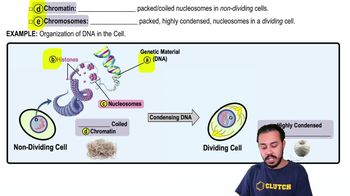
Eukaryotic DNA is packaged with proteins called histones.
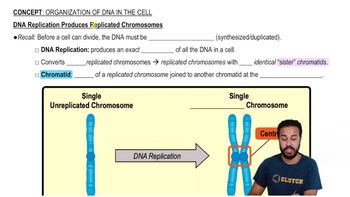
The region that holds sister chromatids together is the centromere.
Telomeres protect the ends of chromosomes.
G1: cell growth
S: DNA replication
G2: preparation for mitosis
Mitosis is the division of the nucleus. Cytokinesis is the division of the cytoplasm.
Meiosis produces four genetically unique haploid daughter cells.
Chromosomes condense and the nuclear envelope breaks down.
Chromosomes line up at the cell's equator.
Sister chromatids separate and move to opposite poles.
Chromosomes decondense and nuclear envelopes reform.
The division of the cytoplasm to form two separate daughter cells.
A karyotype is a visual display of all chromosomes in a cell arranged by size and shape.
Humans have 23 pairs of chromosomes.
They are called autosomes.
Homologous chromosomes are pairs of chromosomes that have the same genes but may have different alleles.
A diploid cell contains paired chromosomes (two sets).
The haploid number represents the number of chromosomes in a gamete (one set).
Gametes are haploid because they contain half the number of chromosomes of somatic cells.
The human sex chromosomes are X and Y.
Alleles arise from changes in DNA called mutations.
It involves the union of genetically different gametes.
Meiosis consists of Meiosis I and Meiosis II.
Meiosis produces four haploid daughter cells from one diploid cell.
DNA is replicated before the first meiotic division.
Homologous chromosomes separate during Meiosis I.
Sister chromatids separate during Meiosis II.
Crossing over is the exchange of DNA between homologous chromosomes during prophase I.
Chiasmata are the physical points where chromosomes exchange DNA.
Random alignment of homologous chromosome pairs during metaphase I, leading to genetic variation.
Nondisjunction is an error in meiosis where chromosomes fail to separate properly.
Disorders include Down syndrome, Turner syndrome, and Klinefelter syndrome.
Because of crossing over, independent assortment, and fertilization.