 뒤로
General Biology: Cellular Respiration and Fermentation
 01:53

이 집합의 용어 (20)
6 CO2 + 6 H2O + Energy → C6H12O6 + 6 O2
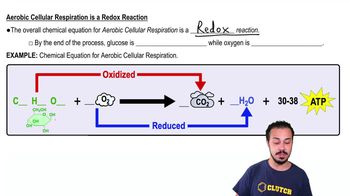
C6H12O6 + 6 O2 → 6 CO2 + 6 H2O + Energy
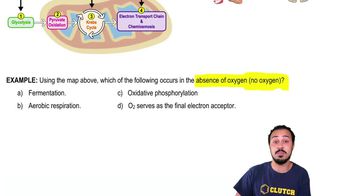
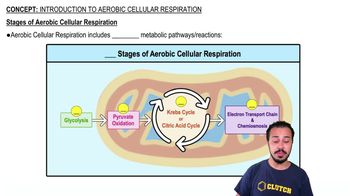
Glycolysis takes place in the cytosol and does not require oxygen.
Both occur in the mitochondrion: the Citric Acid Cycle in the mitochondrial matrix and the Electron Transport Chain in the inner mitochondrial membrane.
2 ATP, 2 NADH, and 2 pyruvate molecules are produced per glucose molecule.
They convert pyruvate (3 carbons) into acetyl CoA (2 carbons), releasing CO2 and producing NADH.
The cycle produces ATP, NADH, FADH2, and releases CO2.
They carry high-energy electrons to the Electron Transport Chain to help produce ATP.
Electrons lose energy as they move through the chain, which pumps protons to create a gradient. ATP synthase uses this gradient to convert ADP to ATP.
Oxygen (O2) accepts electrons and combines with protons to form water.
Approximately 32 ATP molecules are produced per glucose, with theoretical yields up to 36-38 ATP.
Fermentation regenerates NAD+ from NADH to allow glycolysis to continue in the absence of oxygen.
No additional ATP is produced during fermentation; ATP is only generated during glycolysis.
Lactic acid (in muscle cells) and ethyl alcohol (in yeast) are common fermentation products.
Oxygen acts as the final electron acceptor in the Electron Transport Chain, enabling efficient ATP production.
It is the direct synthesis of ATP by transferring a phosphate group to ADP during glycolysis and the Citric Acid Cycle.
ATP production driven by the Electron Transport Chain and ATP synthase using the proton gradient created by electron transfer.
Oxygen accumulation led to the evolution of eukaryotes and multicellular life, but also caused mass extinctions due to its toxicity to anaerobes.
They are complementary processes: photosynthesis stores energy in glucose, while cellular respiration releases energy from glucose.
ATP is the universal energy carrier that drives cellular work.