 뒤로
General Biology: Cellular Respiration and Photosynthesis
 01:44

이 집합의 용어 (20)
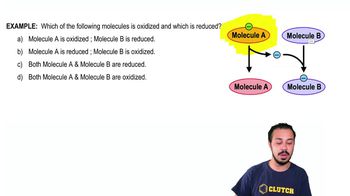
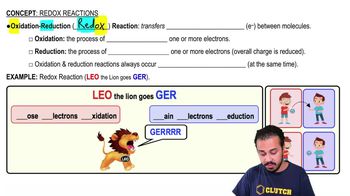
Electrons are transferred between molecules, changing their oxidation states and potential energy.
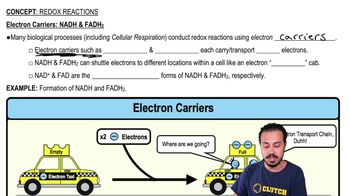
NAD+ is the oxidized form that accepts electrons to become NADH, the reduced form carrying electrons.
Reactants: Glucose, 2 ATP, 2 NAD+. Products: 2 Pyruvate, 4 ATP (net 2 ATP), 2 NADH.
Direct synthesis of ATP by transferring a phosphate group from a substrate to ADP during glycolysis and Krebs cycle.
Approximately 10-15% of total ATP is formed by substrate-level phosphorylation.
Protons flow down their gradient through ATP synthase from the intermembrane space back into the mitochondrial matrix, driving ATP production.
In photosynthesis, protons move from the stroma into the thylakoid space, then flow back through ATP synthase to the stroma, opposite to mitochondria.
1. Glycolysis, 2. Pyruvate oxidation, 3. Krebs cycle, 4. Electron transport chain and chemiosmosis.
Reactants: Acetyl-CoA, NAD+, FAD, ADP. Products: CO2, NADH, FADH2, ATP.
Reactants: Light, H2O, NADP+, ADP. Products: O2, NADPH, ATP.
Reactants: CO2, NADPH, ATP. Products: Glucose (G3P), NADP+, ADP.
Contains thylakoid membranes where light reactions occur and the stroma where the Calvin cycle takes place.
Water (H2O) is oxidized to O2, and CO2 is reduced to glucose.
They accept and donate electrons, facilitating energy transfer in metabolic pathways.
2 ATP are used and 4 ATP are produced, netting 2 ATP per glucose molecule.
Protons flow from the intermembrane space back into the mitochondrial matrix through ATP synthase.
Protons flow from the thylakoid lumen back into the stroma through ATP synthase.
NADH carries high-energy electrons to the electron transport chain for ATP production.
To create a proton gradient by transferring electrons, which drives ATP synthesis via chemiosmosis.
Oxygen (O2) is the final electron acceptor, forming water.