 뒤로
General Biology Core Concepts
 02:13

이 집합의 용어 (25)
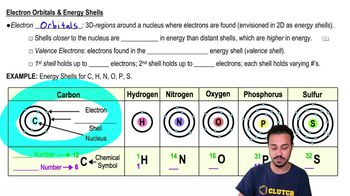
Protons have a positive charge and are in the nucleus.
Neutrons have no charge and are in the nucleus.
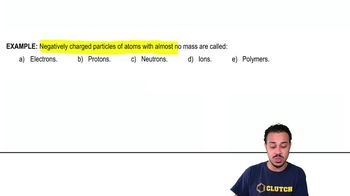
Electrons have a negative charge and orbit outside the nucleus.
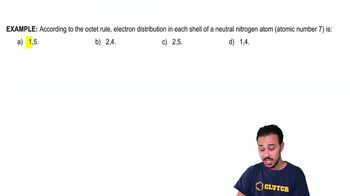
Atomic number = number of protons.
Mass number = protons + neutrons.
Cations are positive ions formed by losing electrons.
Anions are negative ions formed by gaining electrons.
Covalent bonds share electrons;
ionic bonds transfer electrons;
hydrogen bonds are weak attractions important in water and DNA.
Water is polar with slight negative (oxygen) and positive (hydrogen) sides, leading to cohesion, adhesion, surface tension, and ice being less dense than liquid water.
Provide quick energy and structure.
Examples: glucose (monosaccharide), starch (plant storage), glycogen (animal storage), cellulose (plant cell walls).
Function in long-term energy storage, cell membranes, and hormones. They are hydrophobic. Include saturated (no double bonds) and unsaturated fats (double bonds).
Have hydrophilic heads and hydrophobic tails, forming bilayers that control what enters and leaves cells.
Made of amino acids linked by peptide bonds. Functions include enzymes, structure, transport, and signaling.
DNA and RNA made of nucleotides (phosphate, sugar, base). DNA pairs: A-T, C-G. RNA pairs: A-U, C-G.
Prokaryotes: no nucleus, smaller, circular DNA, no membrane organelles. Eukaryotes: nucleus, larger, linear DNA, membrane organelles.
Nucleus: stores DNA.
Ribosomes: make proteins.
Rough ER: protein processing.
Smooth ER: lipid synthesis.
Golgi: packages proteins.
Mitochondria: makes ATP.
Mitochondria and chloroplasts have circular DNA, 70S ribosomes, binary fission, and double membranes, suggesting they were once bacteria.
Independent variable: what is changed.
Dependent variable: what is measured. Hypothesis: testable prediction.
Theory: well-supported explanation.
ATP is the cell's immediate energy currency. ATP breaks down to ADP + phosphate + energy; energy from food rebuilds ATP.
Enzymes are proteins that speed up reactions by lowering activation energy without being consumed.
Passive transport: no energy, moves substances high → low concentration.
Active transport: uses ATP, moves substances low → high concentration.
Made of a phospholipid bilayer with hydrophilic heads and hydrophobic tails.
Controls what enters and leaves the cell, maintaining homeostasis.
Plant cells have cell walls, chloroplasts, and large central vacuoles. Animal cells lack these but have mitochondria and a nucleus.
Light microscope: living cells, color, lower resolution.
SEM: surface details, 3D.
TEM: internal structures, thin slices.
Living things are made of cells, use energy, grow, respond to environment, maintain homeostasis, reproduce, have DNA, and evolve.
Atom → Molecule → Organelle → Cell → Tissue → Organ → Organ System → Organism → Population → Community → Ecosystem → Biosphere.
Energy changes form, e.g., chemical energy in food → ATP → movement; some energy lost as heat.
Hydrogen bonds occur between F, O, N atoms and are crucial for water's properties and DNA structure.
Substances that reduce enzyme activity by preventing substrate binding or altering enzyme shape.