 뒤로
General Biology: Energy, Cell Cycle, Genetics, and Molecular Biology
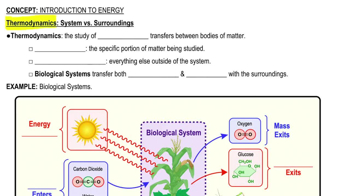
 04:21

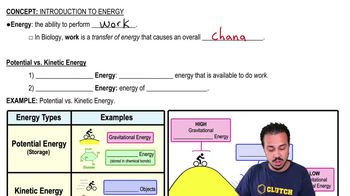
이 집합의 용어 (38)
Energy is the capacity to do work or cause change.
Potential energy is stored energy; kinetic energy is energy of motion.
ATP is the only form of chemical fuel the cell can use directly for energy.
Entropy is a measure of disorder or randomness in a system.
Most life on Earth is powered by energy from the sun.
Producers make their own food (e.g., plants); consumers obtain energy by eating other organisms.
Photosynthesis converts light energy into chemical energy stored in glucose.
Light reactions occur in the thylakoid membranes and produce ATP and NADPH; Calvin cycle occurs in the stroma and synthesizes glucose.
Cellular respiration breaks down glucose to produce ATP.
Glycolysis occurs in the cytoplasm; Krebs cycle in the mitochondrial matrix; Electron transport chain in the inner mitochondrial membrane.
Photosynthesis produces glucose and oxygen used in cellular respiration; cellular respiration produces CO2 and water used in photosynthesis.
Aerobic metabolism requires oxygen; anaerobic metabolism does not.
A calorie is the amount of energy needed to raise 1 gram of water by 1°C; used to measure food energy.
Carbohydrates enter as glucose; amino acids enter at various points after deamination; fats enter as acetyl-CoA after beta-oxidation.
Fermentation is a process that allows ATP production without oxygen by regenerating NAD+.
Animals produce lactic acid as a by-product of anaerobic glucose metabolism.
Fat metabolism produces acetyl-CoA; amino acid metabolism produces various intermediates entering cellular respiration.
All living things are made of cells; cells are the basic unit of life; all cells come from pre-existing cells.
Gametes are reproductive cells; a gene is a DNA segment coding for a trait.
Sexual reproduction involves two parents and genetic variation; asexual reproduction involves one parent and produces clones.
DNA is a double helix of nucleotides storing genetic information.
Chromatin is loosely packed DNA in the nucleus; chromosomes are tightly packed DNA visible during cell division.
The cell cycle includes interphase (growth and DNA replication) and mitosis (cell division).
Prophase: chromosomes condense; Metaphase: chromosomes align; Anaphase: sister chromatids separate; Telophase: nuclei reform; Cytokinesis: cytoplasm divides.
Animal cells form a cleavage furrow; plant cells form a cell plate during cytokinesis.
Meiosis has two divisions producing four haploid cells; mitosis produces two diploid cells.
Crossing over, independent assortment, and random fertilization.
Genetic variation increases survival by enabling adaptation to changing environments.
Traits are inherited as dominant or recessive alleles following predictable ratios.
Complete dominance: one allele masks the other; incomplete dominance: heterozygote shows intermediate phenotype.
Traits associated with genes on sex chromosomes, often X-linked and more common in males.
Nucleotides consist of a sugar, phosphate, and base; they form DNA strands by phosphodiester bonds.
Transcription copies DNA to mRNA; translation uses mRNA to assemble amino acids into proteins.
Transcription occurs in the nucleus making mRNA; translation occurs in the cytoplasm making proteins.
Some mutations are silent due to redundancy in the genetic code or occur in non-coding regions.
Genes can be turned on or off by regulatory proteins controlling transcription.
Mutations in genes controlling cell division can cause uncontrolled cell growth (cancer).
Genetic engineering involves direct DNA manipulation; genetic modification includes traditional breeding and engineering.