 뒤로
General Biology: Evolution and Geologic Concepts
 03:23


이 집합의 용어 (13)
Abiogenesis is the natural process by which life arises from non-living matter, such as simple organic compounds.
Abiotic refers to non-living chemical and physical parts of the environment that affect living organisms and ecosystems.
Adaptive radiation is the rapid evolution of many diverse species from a common ancestor, often after a mass extinction or colonization of new habitats.
Biogenesis is the principle that living organisms arise only from other living organisms.
The geologic record is the history of Earth documented by layers of rock and fossils preserved in the Earth's crust.
Half-life is the time required for half of the atoms in a radioactive isotope to decay.
Homeotic genes control the development of body structures and determine the identity of body parts during embryonic development.
Macroevolution refers to large-scale evolutionary changes that occur over long periods, such as the emergence of new species and groups.
Mass extinction is a widespread and rapid decrease in the biodiversity on Earth, often caused by catastrophic events.
Pangaea was a supercontinent that existed during the late Paleozoic and early Mesozoic eras, before breaking apart into today's continents.
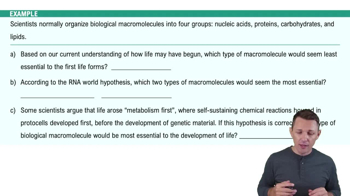
A protocell is a simple, pre-cellular structure with a membrane-like boundary that exhibits some properties of life.
A radioactive isotope is an unstable form of an element that decays over time, releasing radiation.
Radiometric dating is a method used to determine the age of rocks and fossils by measuring the decay of radioactive isotopes.