뒤로

General Biology Exam 2 Study Guide: Molecules of Cells & Cell Structure

컨트롤 버튼이 '내비게이션' 모드로 변경되었습니다.
1/42
  • What defines an organic molecule in biology?

    An organic molecule contains carbon atoms bonded to hydrogen atoms, forming the backbone of biological molecules.
  • How can biological molecules vary structurally?

    They vary by chain length, presence of double bonds, branching, ring structures, and isomers.
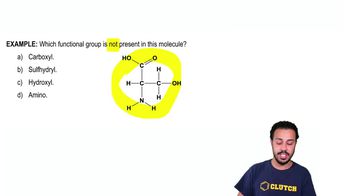
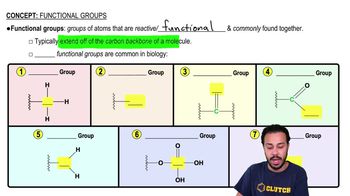
  • Name the seven key functional groups in biological molecules.

    Hydroxyl, Carbonyl, Carboxyl, Amino, Phosphate, Sulfhydryl, and Methyl groups.
  • How do functional groups affect biological molecules?

    They add chemical diversity and polarity, influencing molecule behavior and interactions.
  • What is a dehydration reaction?

    A chemical reaction that links monomers by removing a water molecule to form a polymer.
  • What is hydrolysis in biological molecules?

    A reaction that breaks polymers into monomers by adding water.
  • Define monomer and polymer.

    A monomer is a single building block molecule; a polymer is a chain of monomers linked together.
  • What are monosaccharides? Give an example.

    Simple sugars that serve as monomers for carbohydrates; example: glucose.
  • What is a disaccharide? Provide an example.

    A carbohydrate made of two monosaccharides linked by a glycosidic bond; example: sucrose.
  • Describe polysaccharides and their function.

    Long chains of monosaccharides used for energy storage or structural support; examples include starch and cellulose.
  • How are trans fats made and why are they unhealthy?

    Trans fats are made by hydrogenating unsaturated fats, creating trans double bonds; they increase heart disease risk.
  • What are the main types of lipids and their functions?

    Fats (energy storage), phospholipids (membrane structure), steroids (hormones and membrane fluidity).
  • Distinguish saturated, unsaturated, and trans fats structurally and health-wise.

    Saturated fats have no double bonds and are solid; unsaturated have cis double bonds and are liquid; trans fats have trans double bonds and are unhealthy.
  • What elements compose proteins and what is their basic structure?

    Proteins are made of C, H, O, N; their monomers are amino acids linked by peptide bonds.
  • Why is a protein's shape critical to its function?

    The specific 3D shape determines how a protein interacts with other molecules and performs its role.
  • List the four levels of protein structure.

    Primary (amino acid sequence), secondary (alpha helices and beta sheets), tertiary (3D folding), quaternary (multiple polypeptide chains).
  • What is denaturation and its common cause?

    Denaturation is the loss of protein shape and function, often caused by heat or pH changes.
  • Compare DNA and RNA structures.

    DNA is double-stranded with deoxyribose sugar; RNA is single-stranded with ribose sugar.
  • What are the general functions of DNA and RNA?

    DNA stores genetic information; RNA helps in protein synthesis.
  • Name the major atoms in proteins, carbohydrates, lipids, and nucleic acids.

    Proteins: C, H, O, N; Carbohydrates: C, H, O; Lipids: C, H, O; Nucleic acids: C, H, O, N, P.
  • What are the main components of the cell?

    Plasma membrane, cytoplasm, and organelles.
  • Difference between magnification and resolution in microscopy?

    Magnification enlarges the image; resolution is the ability to distinguish two points as separate.
  • Compare light microscopes and electron microscopes.

    Light microscopes use light and lenses; electron microscopes use electron beams for higher resolution.
  • State the cell theory.

    All living things are made of cells; cells are the basic unit of life; all cells come from preexisting cells.
  • How does cell size relate to function and surface area to volume ratio?

    Smaller cells have higher surface area to volume ratio, allowing efficient nutrient and waste exchange.
  • Compare prokaryotic and eukaryotic cell sizes.

    Prokaryotic cells are generally smaller than eukaryotic cells.
  • Describe the plasma membrane structure.

    A phospholipid bilayer with embedded proteins that controls molecule passage.
  • Key differences between prokaryotic and eukaryotic cells.

    Prokaryotes lack a nucleus and membrane-bound organelles; eukaryotes have both.
  • Function of the nucleus and its components.

    The nucleus stores DNA; the nuclear envelope encloses it; the nucleolus produces ribosomal RNA.
  • Role of ribosomes in the cell.

    Ribosomes synthesize proteins by translating mRNA.
  • Functions of Rough ER and Smooth ER.

    Rough ER synthesizes proteins; Smooth ER synthesizes lipids and detoxifies chemicals.
  • What does the Golgi apparatus do?

    Modifies, sorts, and packages proteins and lipids for transport.
  • Function of lysosomes and peroxisomes.

    Lysosomes digest macromolecules; peroxisomes detoxify harmful substances.
  • Why are abnormal lysosomes problematic?

    They cause accumulation of waste, leading to cellular dysfunction.
  • Describe mitochondria and chloroplasts.

    Mitochondria produce ATP via cellular respiration; chloroplasts conduct photosynthesis.
  • What is the endosymbiotic hypothesis?

    Mitochondria and chloroplasts originated from free-living prokaryotes engulfed by ancestral eukaryotes.
  • Components of the cytoskeleton and their functions.

    Microfilaments (support and movement), microtubules (shape and transport), intermediate filaments (structural stability).
  • Role of cilia, flagella, basal bodies, and centrioles.

    Cilia and flagella enable cell movement; basal bodies and centrioles organize microtubules.
  • Differences between plant and animal cell surfaces.

    Plant cells have a rigid cell wall; animal cells have extracellular matrix and various junctions.
  • Types and functions of cell junctions.

    Plasmodesmata (plant cell communication), tight junctions (seal cells), anchoring junctions (attach cells), gap junctions (animal cell communication).
  • What is the extracellular matrix?

    A network of proteins and carbohydrates outside animal cells that provides support and signaling.
  • Summarize the four functional categories of cell organelles.

    Genetic control, manufacture/distribution/breakdown, energy processing, structural support/movement/communication.