 뒤로
General Biology: Genetics
 02:09

이 집합의 용어 (36)
Genetics is the science of inheritance, studying how traits are transmitted from one generation to the next.
Heredity is the transmission of traits from parents to offspring across generations.
Variation refers to differences in appearance or traits among offspring and between parents and siblings.
Somatic cells are body cells not involved in reproduction; Germ cells are cells that undergo meiosis to form gametes.
A gamete is a haploid reproductive cell, such as sperm or egg, containing one set of chromosomes.
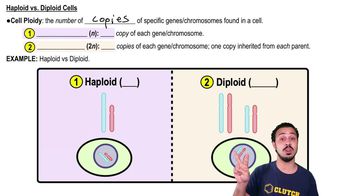
Diploid cells have two sets of chromosomes; Haploid cells have one set, typical of gametes.
Asexual reproduction produces genetically identical offspring from one parent; Sexual reproduction combines genes from two parents, increasing genetic diversity.
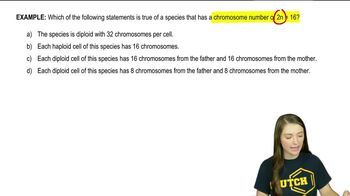
A chromosome is a structure organizing DNA; species have characteristic chromosome numbers, usually in pairs in somatic cells.
A karyotype is a visual display of an individual's chromosomes arranged in homologous pairs from largest to smallest.
Homologous chromosomes are chromosome pairs with similar shape and gene sequence but possibly different alleles.
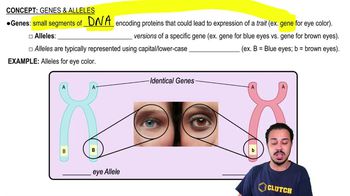
An allele is a variant form of a gene that determines specific traits.
A dominant allele is always expressed when present; a recessive allele is expressed only when the dominant allele is absent.
Homozygous means having two identical alleles for a trait; heterozygous means having two different alleles.
Genotype is the genetic makeup of an individual; phenotype is the observable traits resulting from the genotype.
Alleles segregate during gamete formation so each gamete carries only one allele for each gene.
A test cross determines an unknown genotype by crossing with a homozygous recessive individual and analyzing offspring phenotypes.
Incomplete dominance occurs when the heterozygote phenotype is intermediate between the two homozygotes.
Codominance occurs when both alleles in a heterozygote are fully expressed, producing a mixed phenotype.
A gene with more than two alleles in a population is said to have multiple alleles, increasing phenotypic variety.
Lethal alleles cause death when expressed, often recessive, and can affect survival depending on dominance and timing.
Sickle-cell disease is autosomal recessive; heterozygotes have resistance to malaria but do not suffer from anemia.
Inheritance of two genes on different chromosomes, assorting independently, producing characteristic genotypic and phenotypic ratios.
Alleles of different genes assort independently during gamete formation if genes are on different chromosomes.
The ABO blood group is controlled by multiple alleles IA, IB, and i, with codominance between IA and IB.
Rh+ is dominant over Rh-; Rh incompatibility between mother and fetus can cause hemolytic disease of the newborn.
Epistasis occurs when one gene affects or masks the expression of another gene.
Polygenic inheritance involves multiple genes contributing to a single trait, causing continuous variation.
Environmental factors can influence gene expression and phenotype, such as temperature affecting coat color.
Common systems include XX-XY (mammals), XX-X0 (some insects), ZZ-ZW (birds), and haplo-diploid (bees).
Genes located on sex chromosomes, often showing different inheritance patterns in males and females.
One X chromosome in female mammals is randomly inactivated, forming a Barr body, causing mosaic expression of X-linked genes.
Aneuploidy is an abnormal number of chromosomes due to nondisjunction, causing disorders like Down syndrome.
Caused by trisomy 21, characterized by intellectual disability and distinct physical features.
Monosomy X (45X), females with short stature, sterility, and no mental impairment.
XXY males with delayed puberty, reduced fertility, and some female secondary sexual characteristics.
Some cancers, like chronic myelogenous leukemia, result from chromosomal translocations disrupting gene function.