Skip to main content
General Biology
나의 코스
배우기
시험 준비
AI 튜터
학습 가이드
교과서적 해결책
플래시카드
탐험해 보세요
앱을 사용해 보세요
나의 코스
배우기
시험 준비
AI 튜터
학습 가이드
교과서적 해결책
플래시카드
탐험해 보세요
앱을 사용해 보세요
뒤로
General Biology: History of Life, Phylogeny, and Plant Diversity
카드를 뒤집기 위해 탭할 수 있습니다.
What is phylogeny?
카드를 뒤집기 위해 탭할 수 있습니다.
👆
What is phylogeny?
Phylogeny is the evolutionary history and relationships among species or groups of organisms.
진행 상황 추적
컨트롤 버튼이 '내비게이션' 모드로 변경되었습니다.
1/20
추천 영상
04:53
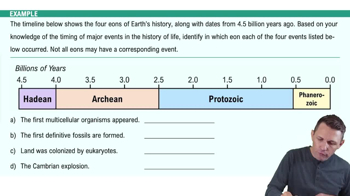
History of Life on Earth Example 1
2410
views
27
rank
07:18
Geologic Record
3032
views
35
rank
이 집합의 용어 (20)
하이드의 정의
What is phylogeny?
Phylogeny is the evolutionary history and relationships among species or groups of organisms.
What does the history of life study?
The history of life studies the origin, evolution, and extinction of organisms over geological time.
What is a clade in phylogeny?
A clade is a group of organisms that includes an ancestor and all its descendants.
What is the significance of seed plants in plant diversity?
Seed plants produce seeds for reproduction, allowing better survival and dispersal compared to seedless plants.
Name two major groups of seed plants.
Gymnosperms and angiosperms are the two major groups of seed plants.
What distinguishes gymnosperms from angiosperms?
Gymnosperms have naked seeds not enclosed in fruit, while angiosperms have seeds enclosed within fruits.
What are the main characteristics of plant diversity I (non-seed plants)?
Non-seed plants include mosses, liverworts, and ferns; they reproduce via spores and often require water for fertilization.
What role do spores play in plant life cycles?
Spores are haploid reproductive cells that can develop into a new organism without fertilization.
What is the importance of vascular tissue in plants?
Vascular tissue (xylem and phloem) transports water, nutrients, and sugars, enabling plants to grow taller and larger.
Define the term 'monophyletic group'.
A monophyletic group consists of an ancestor and all of its descendants, representing a single branch on the tree of life.
What is the significance of the fossil record in the history of life?
The fossil record provides evidence of past life forms and evolutionary changes over time.
What is adaptive radiation?
Adaptive radiation is the rapid evolution of many species from a common ancestor to fill diverse ecological niches.
How do angiosperms reproduce?
Angiosperms reproduce sexually through flowers, producing seeds enclosed in fruits.
What is the function of flowers in angiosperms?
Flowers facilitate reproduction by attracting pollinators and producing gametes.
What is the difference between homology and analogy in phylogeny?
Homology refers to traits inherited from a common ancestor; analogy refers to similar traits evolved independently.
What is a phylogenetic tree?
A phylogenetic tree is a diagram showing evolutionary relationships among species based on shared traits.
What are bryophytes?
Bryophytes are non-vascular plants like mosses that live in moist environments and lack true roots.
What evolutionary advantage do seeds provide over spores?
Seeds protect the embryo, provide stored food, and allow dormancy, improving survival in harsh conditions.
What is the role of xylem in plants?
Xylem transports water and minerals from roots to other parts of the plant.
What is the role of phloem in plants?
Phloem transports sugars and organic nutrients from leaves to other parts of the plant.
 뒤로뒤로
 04:53