 뒤로
General Biology Key Concepts
 01:35

이 집합의 용어 (28)
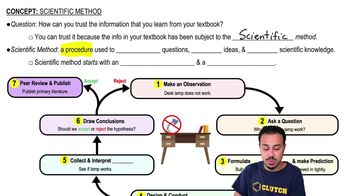
A testable prediction in the scientific method.
An explanation supported by lots of evidence.
The variable that you change in an experiment.
The variable that you measure in an experiment.
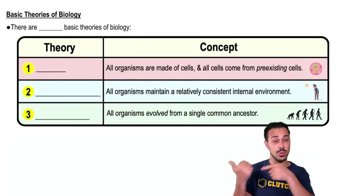
Made of cells, use energy, grow and develop.
The ability of living things to maintain a stable internal environment.
Atom → Molecule → Organelle → Cell → Tissue → Organ → Organ System → Organism → Population → Community → Ecosystem → Biosphere
Proton (+), Neutron (0), Electron (-)
The number of protons in an atom.
Atoms of the same element with a different number of neutrons.
Covalent (share electrons), Ionic (transfer electrons), Hydrogen (weak attraction)
Cohesion causes water molecules to stick together, creating surface tension.
Ice is less dense than liquid water.
Acids have low pH and high H+ concentration; bases have high pH and low H+ concentration.
Carbohydrates, Lipids, Proteins, Nucleic Acids
Provide quick energy.
Store long-term energy and make up cell membranes.
Chains of amino acids linked by peptide bonds.
Proteins that speed up chemical reactions by lowering activation energy.
ATP (adenosine triphosphate)
A phospholipid bilayer with hydrophilic heads and hydrophobic tails.
Passive transport does not use ATP and moves substances high to low concentration; active transport uses ATP and moves substances low to high.
Nucleus: stores DNA; Mitochondria: makes ATP; Golgi Apparatus: packages proteins.
Plant cells have chloroplasts and cell walls; animal cells have a nucleus but no chloroplasts or cell wall; bacterial cells have no nucleus.
Mitochondria and chloroplasts were once bacteria, supported by their circular DNA and double membranes.
Make proteins.
Passive transport of water across a membrane from high to low concentration.
Resist changes in pH to maintain stable conditions.