 뒤로
General Biology Key Concepts
 06:35

이 집합의 용어 (20)
Laboratory safety involves following protocols to prevent accidents and ensure a safe working environment.
Metric conversions involve changing units within the metric system, such as converting milliliters to liters or grams to kilograms.
Pipettes are tools used to measure and transfer precise volumes of liquids in the lab.
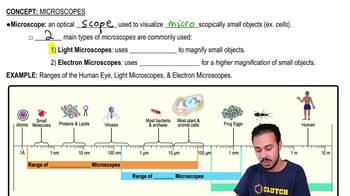
A microscope magnifies small objects, allowing observation of cells and their structures.
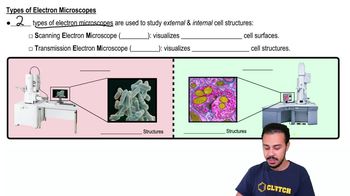
Microscopes enable viewing of cell structures such as the nucleus, cytoplasm, and membrane.
Diffusion is the passive movement of molecules from an area of higher concentration to lower concentration.
Osmosis is the diffusion of water across a selectively permeable membrane.
Tonicity describes the relative concentration of solutes outside a cell affecting water movement.
The scientific method includes observation, hypothesis, experimentation, analysis, and conclusion.
Graphing visually represents data to identify trends and relationships.
A spectrophotometer measures light absorbance to analyze concentrations of substances.
Enzymes are biological catalysts that speed up chemical reactions without being consumed.
Cellular respiration converts glucose and oxygen into ATP, the cell's energy currency.
Fermentation is an anaerobic process that produces energy and byproducts like lactic acid or alcohol.
Aerobic respiration requires oxygen; anaerobic respiration does not and produces less ATP.
Enzymes lower activation energy, enabling metabolic reactions to occur efficiently.
The metric system provides a standardized way to measure and communicate biological data.
Tonicity affects cell volume by causing water to move in or out, leading to swelling or shrinking.
Spectrophotometers measure changes in absorbance to track enzyme activity over time.
Key parts include the eyepiece, objective lenses, stage, and light source.