 뒤로
General Biology Lab Exam 1 Study Guide
 01:35

이 집합의 용어 (19)
Use proper PPE, follow disposal procedures, and maintain cleaning protocols to ensure safety.
PPE stands for Personal Protective Equipment; it protects you from hazards in the lab.
Dispose of chemicals and biological materials according to lab guidelines to prevent contamination and accidents.
Clean work surfaces and equipment after use to maintain a safe and contamination-free environment.
Technology is the application of scientific knowledge for practical purposes.
Deductive science uses general principles to predict specific outcomes.
Inductive science involves making generalizations based on specific observations.
Pure science is the pursuit of knowledge for its own sake without immediate practical application.
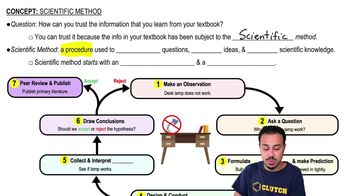
Observation, Question, Hypothesis, Experiment, Data Collection, Conclusion, Communication.
A hypothesis is a testable prediction; a theory is a well-supported explanation based on evidence.
Water boils at 100°C at standard atmospheric pressure.
There are 1000 milligrams in one gram.
Eyepiece, objective lenses, stage, light source, coarse and fine focus knobs, arm, base.
They magnify the specimen at different levels for detailed viewing.
Macromolecules are large molecules essential for life, including carbohydrates, lipids, proteins, and nucleic acids.
Carbohydrates provide energy and structural support; examples include sugars and starches.
Lipids store energy and make up cell membranes; examples include fats and oils.
Proteins are made of amino acids and perform structural, enzymatic, and regulatory roles.
Nucleic acids like DNA and RNA store and transmit genetic information.