 뒤로
General Biology: Organic Molecules and Biomolecules
 03:35

이 집합의 용어 (19)
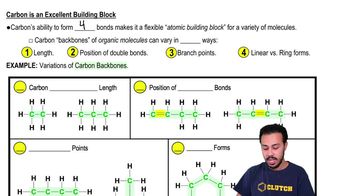
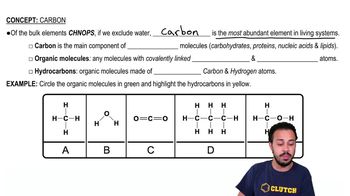
Carbon has four valence electrons allowing it to form four covalent bonds, enabling complex and diverse organic molecules.
Functional groups determine the chemical properties and reactivity of carbon molecules by adding specific reactive sites.
Synthesis adds monomers by removing water (dehydration), while degradation produces monomers by adding water (hydrolysis).
An isomer is a molecule with the same molecular formula but different structural arrangements, leading to different properties.
Monosaccharides: glucose, fructose; Disaccharides: sucrose, lactose; Polysaccharides: starch, glycogen, cellulose.
Starch and glycogen store energy; cellulose provides structural support in plant cell walls.
Lipids store energy, form cell membranes, and act as signaling molecules.
Fats and oils are produced mainly in adipose tissue and plant cells respectively.
Triglycerides have three fatty acids; phospholipids have two fatty acids plus a phosphate group; steroids have four fused carbon rings.
Phospholipids form membranes; steroids regulate membrane fluidity and hormones; waxes provide waterproofing.
Proteins function as enzymes, structural components, transporters, signaling molecules, and antibodies.
A polypeptide forms by linking amino acids via peptide bonds through dehydration synthesis.
Primary (amino acid sequence), secondary (alpha helices and beta sheets), tertiary (3D folding), quaternary (multiple polypeptides).
pH, temperature, salt concentration, and mutations can alter protein folding and function.
Proper folding ensures function; misfolding can cause diseases like Alzheimer's and cystic fibrosis.
A nucleotide is a monomer; a nucleic acid is a polymer of nucleotides (DNA or RNA).
DNA is double-stranded, stores genetic info; RNA is single-stranded, involved in protein synthesis.
Purines (two rings) pair with pyrimidines (one ring) to maintain uniform DNA width and stable hydrogen bonding.
ATP stores energy in its high-energy phosphate bonds, especially the bond between the second and third phosphate groups.