 뒤로
General Biology Study Guide Flashcards
 02:09


이 집합의 용어 (32)
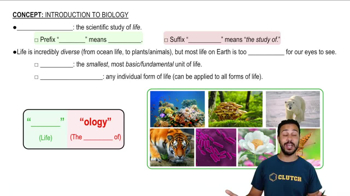
Biology is the study of life and living organisms. Life is defined by characteristics such as growth, reproduction, metabolism, response to stimuli, homeostasis, and cellular organization.
The cell theory states all living things are made of cells. Evolution by natural selection explains the diversity and adaptation of organisms over time.
It uses observation, hypothesis, experimentation, and analysis. Theories are well-supported explanations that can be modified or rejected based on new evidence. Science explains natural phenomena but cannot address supernatural claims.
The metric system provides standardized units for measurement, essential for accuracy and reproducibility. Basic units include meter (length), gram (mass), and liter (volume).
Atoms are basic units of matter. Elements are pure substances of one atom type. Isotopes have different neutron numbers. Ions are charged atoms due to electron loss or gain.
The octet rule states atoms tend to have eight electrons in their valence shell for stability, guiding how atoms form bonds.
Covalent bonds (strongest) share electrons, ionic bonds transfer electrons, and hydrogen bonds are weak attractions between polar molecules.
Water's polarity and hydrogen bonds give it cohesion, adhesion, surface tension, high specific heat, and solvent abilities. Ice floats due to its lower density from hydrogen bonding.
pH measures hydrogen ion concentration. Acids increase [H+], bases increase [OH-], and buffers stabilize pH by neutralizing excess ions.
Carbon forms four covalent bonds, allowing diverse structures. Functional groups and isomers affect molecule properties and functions.
Monomers are single units that join via condensation (dehydration synthesis) to form polymers. Polymers break down by hydrolysis.
Carbohydrates provide energy and structural support. Monomers are monosaccharides (e.g., glucose), polymers include starch and cellulose.
Primary: amino acid sequence; secondary: alpha helices and beta sheets via hydrogen bonds; tertiary: 3D folding via various bonds; quaternary: multiple polypeptide chains.
Nucleic acids store and transmit genetic information. Monomers are nucleotides. DNA and RNA differ in sugar and bases; RNA can catalyze reactions.
Phospholipids have a hydrophilic (polar) head and hydrophobic (nonpolar) tails, allowing bilayer formation in membranes.
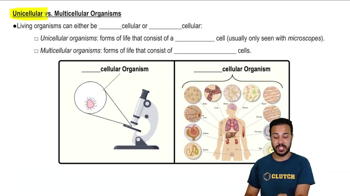
All living organisms are composed of cells, cells are the basic unit of life, and all cells arise from pre-existing cells.
Cell membrane, cytoplasm, ribosomes, and genetic material (DNA or RNA).
Prokaryotes lack membrane-bound organelles and nucleus; eukaryotes have both. Eukaryotes have compartmentalization via organelles.
It proposes mitochondria and chloroplasts originated from free-living prokaryotes engulfed by ancestral eukaryotic cells, supported by their own DNA and double membranes.
Composed of a phospholipid bilayer with embedded proteins, it is selectively permeable and fluid, regulating substance movement and cell communication.
Diffusion: movement of molecules from high to low concentration; osmosis: diffusion of water; active transport: energy-dependent movement against concentration gradient.
Cells use receptors and ligands (signal molecules) for intracellular and intercellular communication, often amplifying signals via ATP or GTP energy.
Enzyme activity depends on activation energy, enzyme and substrate concentrations, inhibitors, temperature, and pH affecting enzyme shape and function.
\(\mathrm{C_6H_{12}O_6 + 6O_2 \rightarrow 6CO_2 + 6H_2O + ATP}\)
Glycolysis occurs in the cytoplasm; Krebs cycle and electron transport occur in the mitochondria.
Chemiosmosis uses a proton gradient to drive ATP synthase, producing ATP during electron transport in mitochondria.
Photosynthesis converts light energy to chemical energy in chloroplasts of plant cells.
Photosystem II splits water to produce ATP; Photosystem I produces NADPH; both work in the light-dependent reactions.
The light-independent reaction fixing CO2 into glucose using ATP and NADPH, involving ribulose bisphosphate and rubisco enzymes.
Each new DNA molecule contains one original strand and one newly synthesized strand, as shown by Meselson-Stahl experiments.
DNA polymerase III synthesizes new DNA strands by adding nucleotides in the 5' to 3' direction, requiring an RNA primer.
It uses negative control where the repressor binds the operator to block transcription; lactose acts as an inducer to inactivate the repressor.