 뒤로
General Biology: The Cell Cycle
 04:45

이 집합의 용어 (20)
The cell cycle consists of interphase (G1, S, G2 phases) and mitotic phase (mitosis and cytokinesis).
In the G1 phase, the cell grows and performs normal functions while preparing for DNA replication.
The S phase is when DNA replication occurs, duplicating the chromosomes.
During G2 phase, the cell continues to grow and prepares for mitosis by producing necessary proteins.
Mitosis includes prophase, metaphase, anaphase, and telophase.
In prophase, chromatin condenses into chromosomes, and the mitotic spindle begins to form.
During metaphase, chromosomes align at the cell's equatorial plate.
In anaphase, sister chromatids separate and move toward opposite poles of the cell.
Telophase is when chromosomes decondense, nuclear envelopes reform, and the cell prepares to divide.
Cytokinesis is the division of the cytoplasm, resulting in two separate daughter cells.
Checkpoints monitor and regulate the cycle to ensure proper division and DNA integrity.
Checkpoints are mainly at G1/S, G2/M, and during metaphase.
The G0 phase is a resting state where cells exit the cycle and do not divide.
During the S phase and checkpoints, the cell uses repair mechanisms to ensure accurate DNA replication.
Cyclins and CDKs regulate progression through the cell cycle by activating or inhibiting key proteins.
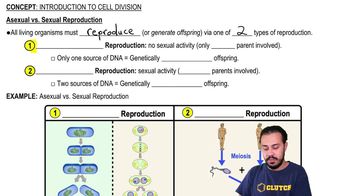
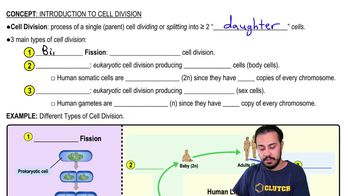
Mitosis produces two identical diploid cells; meiosis produces four genetically diverse haploid cells.
Chromatin is the uncondensed form of DNA and proteins in the nucleus during interphase.
The activation of the mitosis-promoting factor (MPF) triggers the start of mitosis.
The spindle apparatus is a structure of microtubules that separates chromosomes during mitosis.
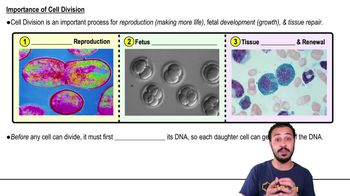
The cell cycle enables growth, tissue repair, and reproduction in multicellular organisms.