 뒤로
lab8-Cellular Respiration and Fermentation
 01:53

이 집합의 용어 (22)
Cellular respiration is a process that provides cells with usable energy on demand by breaking down glucose to produce ATP.
Cellular respiration is an exergonic reaction, releasing energy.
The main fuel for cellular respiration is glucose.
Glucose is catabolized through metabolic reactions, releasing energy slowly and transferring it to ATP.
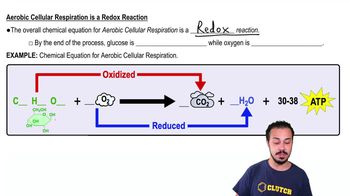
Aerobic respiration is the complete breakdown of glucose in the presence of oxygen, producing large amounts of ATP.
The final electron acceptor is oxygen, which is reduced to form water.
Aerobic respiration produces about 36 to 38 ATP molecules per glucose.
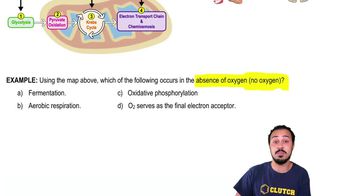
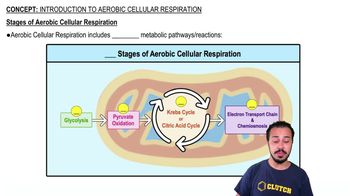
Glycolysis is the anaerobic first stage of cellular respiration where glucose is split into two pyruvate molecules, yielding 2 ATP.
Glycolysis takes place in the cytosol of the cell.
Pyruvate enters the citric acid cycle in the mitochondrial matrix (eukaryotes) or cytosol (prokaryotes).
The citric acid cycle yields 2 ATP per glucose and generates most of the CO2 produced.
NAD+ and FAD are coenzymes that accept high-energy electrons, becoming NADH and FADH2.
The electron transport chain transfers electrons through oxidation-reduction reactions, releasing energy to generate ATP.
Oxidative phosphorylation couples electron transport to ATP synthesis using chemiosmosis and reduces oxygen to water.
Oxidative phosphorylation produces about 32 to 34 ATP molecules per glucose.
The by-products of cellular respiration are water and carbon dioxide.
Obligate aerobes require oxygen to meet their metabolic needs.
Obligate anaerobes cannot survive in oxygen and produce ATP exclusively through anaerobic respiration.
Fermentation is an anaerobic process generating small amounts of ATP by converting pyruvate to lactic acid or ethanol and CO2.
Fermentation yields 2 ATP molecules per glucose.
Lactic acid fermentation occurs in some bacteria and muscle cells when oxygen is scarce and ATP demand is high.
Facultative anaerobes can perform aerobic respiration with oxygen or fermentation without oxygen, like yeast.