 뒤로
Lipids, Membranes, and the First Cells
 03:30

이 집합의 용어 (20)
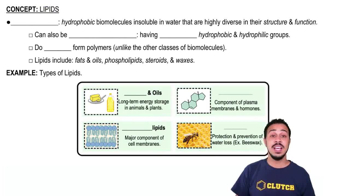
Lipids are primarily composed of hydrocarbons, which are hydrophobic molecules.
Main membrane lipids include phospholipids, glycolipids, and cholesterol.
A phospholipid has a hydrophilic head containing a phosphate group and two hydrophobic fatty acid tails.
Phospholipids spontaneously form bilayers with hydrophobic tails inward and hydrophilic heads outward, creating membranes.
The amphipathic nature of lipids, having both hydrophilic and hydrophobic parts, drives membrane formation.
The fluid mosaic model describes membranes as a fluid lipid bilayer with proteins embedded, allowing lateral movement.
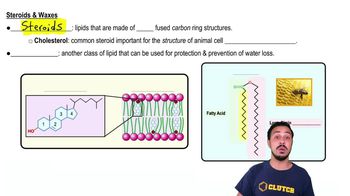
Cholesterol modulates membrane fluidity and stability by preventing tight packing of phospholipids.
Membranes are selectively permeable due to the hydrophobic core that restricts passage of polar molecules and ions.
Membrane proteins function in transport, signal transduction, and cell recognition.
First cells likely formed membranes from simple amphipathic molecules that spontaneously assembled into vesicles.
A protocell is a simple vesicle with a membrane-like structure that can maintain an internal environment.
Fatty acids have a single hydrophobic tail and form micelles, while phospholipids have two tails and form bilayers.
Membranes provided a barrier to separate internal chemistry from the environment, enabling cellular processes.
The hydrophobic effect drives lipids to minimize contact with water, causing them to self-assemble into bilayers.
Membrane fluidity is influenced by temperature, fatty acid saturation, and cholesterol content.
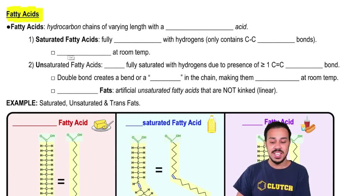
Saturated tails pack tightly, reducing fluidity; unsaturated tails create kinks, increasing fluidity.
Membrane asymmetry means the two leaflets have different lipid and protein compositions, affecting function and signaling.
Membranes create gradients used in ATP synthesis and store energy in the form of electrochemical gradients.
Micelles are spherical lipid aggregates with tails inward; bilayers are double-layered sheets forming membranes.
Membranes define cell boundaries, regulate transport, and enable compartmentalization necessary for life.