 뒤로
Mitosis and Cell Division Basics
 03:21

이 집합의 용어 (19)
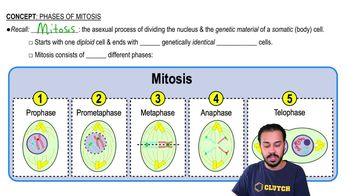
The cell packs up its DNA into tightly coiled chromosomes that look like dark X-shaped squiggles inside the nucleus.
As a messy ball of yarn; loose DNA condenses into clear, dark, X-shaped chromosomes.
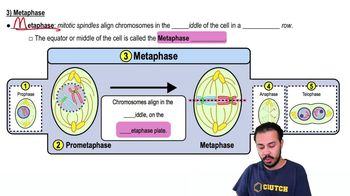
Chromosomes line up in a neat single-file line across the cell's equator to ensure equal splitting.
A straight line down the middle of the cell with spindle fibers attached to each chromosome.
The sister chromatids are pulled apart and dragged toward opposite sides of the cell.
They snap in half into V-shaped chromatids being pulled away like opposing teams in tug-of-war.
The cell pinches in the middle and forms two new nuclei around the separated DNA bundles.
It looks like a peanut with two dark spots, each spot being a new nucleus forming.
DNA in its loose, uncoiled form during normal cell life (Interphase), resembling loose spaghetti.
Tightly packed and coiled DNA in an X shape, formed during Prophase to protect DNA during movement.
One identical half of a duplicated chromosome; each arm of the X after it splits in Anaphase.
The sticky button holding two sister chromatids together in the middle to form the X shape.
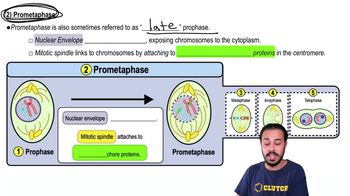
The cell's anchors that move to opposite ends during mitosis to steer chromosome movement.
Microscopic fibers (microtubules) that grow from centrosomes, attach to chromosomes, and pull them apart.
The specific anchor point on the centromere where spindle fibers attach during mitosis.
Chromosomes become packed and visible as X-shaped structures.
Chromosomes align in the middle of the cell in a straight line.
Sister chromatids separate and move to opposite poles of the cell.
Two new nuclei form as the cell begins to divide.