 뒤로
October 9th (start of unit 4)
 06:35

이 집합의 용어 (21)
Cell Theory?
Cell theory states that all living things are composed of cells and all cells come from other cells.
Robert Hooke's Contribution to cell theory?
Robert Hooke (1665) was the first person to look at a plant through a microscope and made the term 'cellulae' for tiny compartments.
Light Microscope (LM) Function?
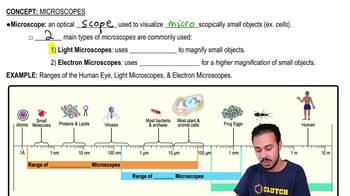
LM uses visible light passing through a sample and glass lenses to magnify the image, projecting it into the eye or a camera.
Magnification vs Resolution?
Magnification: increases image size (LM 230x);
Resolution: measures image clarity and the ability to distinguish two objects being separate from each other.
Resolution Limits of Light Microscopes?
Light microscopes have a resolution limit of about 0.2 μm and cannot improve beyond ~1000X magnification.
Electron Microscopes (EM) ?
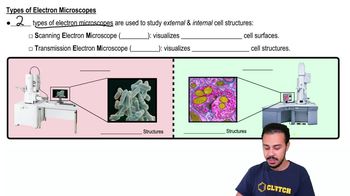
EM began in 1950s using electron beams and its 100 folds better then the LM but can only view dead samples and produces black and white images.
Scanning Electron Microscope (SEM)?
SEM studies cell surface architecture by coating samples with gold and producing 3D images from scattered electrons.
Transmission Electron Microscope (TEM)?
TEM passes electrons through thin specimen sections stained with heavy metals to produce detailed internal cell images.
Limitations of Electron and Light Microscopy?
EM cannot view live samples; LM cannot see many small cell parts or microorganisms.
Surface Area to Volume Ratio in Cells?
Smaller cells have a higher surface area to volume ratio, facilitating efficient exchange with the environment. where large cells has less.
Plasma Membrane Structure?
The plasma membrane is a flexible boundary made of a phospholipid bilayer that controls passage of substances in and out of the cell.
Types of cells?
Prokaryotic and Eukaryotic.
Prokaryotic Cells Characteristics?
Prokaryotes are small, simple cells without membrane-bound organelles, with DNA in a nucleoid region.
Prokaryotic Cell Wall and Capsule?
The cell wall is a rigid shell protecting and maintaining shape; the capsule is a sticky outer coat aiding attachment.
Flagella in Prokaryotes?
Flagella are long projections that propel prokaryotic cells through their environment; not all prokaryotes have them.
Eukaryotic Cells Distinct Features?
Eukaryotes have a membrane-enclosed nucleus and many membrane-bound organelles performing specific functions.
Common Structures in All Cells?
All cells have a plasma membrane, ribosomes, cytosol, DNA, and cytoplasm (excluding the nucleus interior).
Organelles and Their Functions?
Organelles are membrane-bound structures with specific roles: genetic control, molecule processing, energy conversion, and structural support.
Organelles Unique to Animal Cells?
Animal cells uniquely have lysosomes, centrosomes, and sometimes flagella and cilia.
Organelles Unique to Plant Cells?
Plant cells uniquely have a rigid cellulose cell wall, plasmodesmata, chloroplasts, and a large central vacuole.
How do organelles support cell metabolism?
Each organelle maintains specific internal conditions needed for enzymes to function properly and support cellular metabolism.