 뒤로
Photosynthesis and Cellular Respiration
 01:53

이 집합의 용어 (20)
Photosynthesis is the process by which green plants and some other organisms use sunlight to synthesize foods from carbon dioxide and water, producing oxygen as a byproduct.
6CO2 + 6H2O + light energy → C6H12O6 + 6O2
Photosynthesis occurs in the chloroplasts, specifically in the thylakoid membranes and stroma.
The light-dependent reactions and the Calvin cycle (light-independent reactions).
Light energy is captured by chlorophyll to produce ATP and NADPH, and water is split to release oxygen.
The Calvin cycle uses ATP and NADPH to convert CO2 into glucose through carbon fixation.
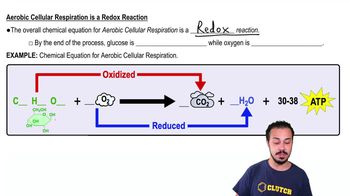
Cellular respiration is the process by which cells break down glucose to produce ATP, using oxygen and releasing carbon dioxide and water.
C6H12O6 + 6O2 → 6CO2 + 6H2O + energy (ATP)
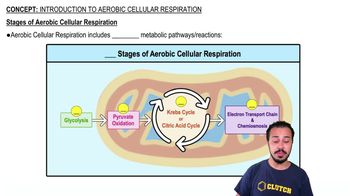
Cellular respiration occurs mainly in the mitochondria.
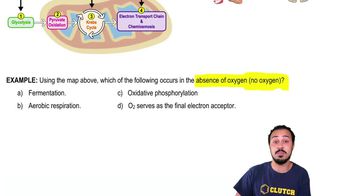
Glycolysis, Krebs cycle (citric acid cycle), and electron transport chain.
Glucose is broken down into two molecules of pyruvate, producing a small amount of ATP and NADH in the cytoplasm.
The Krebs cycle processes pyruvate to produce NADH, FADH2, and ATP, releasing CO2 as a byproduct.
NADH and FADH2 donate electrons to the chain, driving ATP production and combining electrons with oxygen to form water.
They are complementary processes: photosynthesis stores energy in glucose, while cellular respiration releases energy from glucose.
Oxygen is the final electron acceptor, forming water.
ATP is the main energy currency used to power cellular activities.
Chlorophyll is the primary pigment that absorbs light energy.
Oxygen (O2) is released as a byproduct when water is split.
Oxygen (O2) is consumed to accept electrons in the electron transport chain.
They carry high-energy electrons to the electron transport chain to help produce ATP.