 뒤로
Photosynthesis Vocabulary and Light Reactions
 03:32

이 집합의 용어 (20)
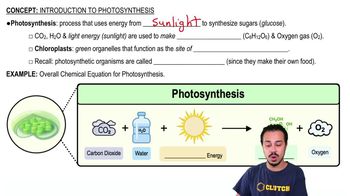
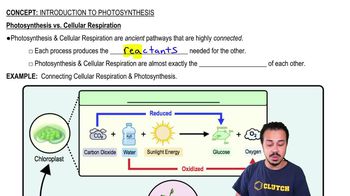
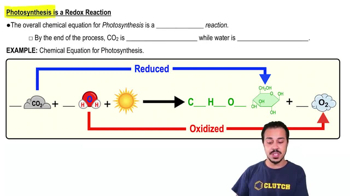
Photosynthesis is the process by which green plants and some other organisms use sunlight to synthesize foods from carbon dioxide and water.
Light reactions are the first stage of photosynthesis where light energy is converted into chemical energy in the form of ATP and NADPH.
Chlorophyll is the green pigment in plants that absorbs light energy used to carry out photosynthesis.
Photosystem II is the protein-pigment complex that captures light energy to split water molecules, releasing oxygen and electrons.
Photosystem I uses light energy to produce NADPH by transferring electrons to NADP+.
The ETC is a series of proteins in the thylakoid membrane that transfer electrons and pump protons to generate ATP.
ATP synthase is an enzyme that synthesizes ATP using the proton gradient created by the ETC.
Photolysis is the splitting of water molecules into oxygen, protons, and electrons using light energy in Photosystem II.
NADP+ is an electron carrier that accepts electrons and a proton to become NADPH during the light reactions.
A proton gradient is the difference in proton concentration across the thylakoid membrane used to drive ATP synthesis.
The thylakoid membrane is the site within chloroplasts where light reactions occur.
The Calvin cycle uses ATP and NADPH from light reactions to fix carbon dioxide into glucose.
Photophosphorylation is the process of generating ATP from ADP and phosphate using light energy during photosynthesis.
Light energy is the energy from sunlight absorbed by chlorophyll to drive photosynthesis.
The reaction center is the part of a photosystem where excited electrons are transferred to the electron transport chain.
The primary electron acceptor captures excited electrons from chlorophyll in the reaction center.
Oxygen evolution is the release of oxygen gas as a byproduct of water splitting in photosynthesis.
Cyclic electron flow is an alternative pathway where electrons cycle back to Photosystem I to produce ATP without NADPH or oxygen.
Non-cyclic electron flow moves electrons from water to NADP+, producing NADPH, ATP, and oxygen.
Light-dependent reactions are the steps of photosynthesis that require light to produce ATP and NADPH.