 뒤로
Viruses and Related Concepts - General Biology
 04:50

이 집합의 용어 (22)
AIDS is a disease caused by the HIV virus that weakens the immune system, making the body vulnerable to infections.
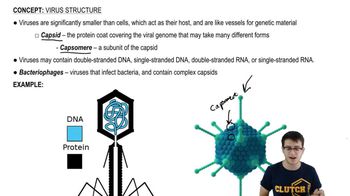
A bacteriophage is a virus that infects and replicates within bacteria.
The capsid is the protein shell that encloses the viral genome.
Covid-19 is a disease caused by the SARS-CoV-2 virus, leading to respiratory illness and global pandemic.
CRISPR-Cas is a bacterial defense system that cuts viral DNA using restriction enzymes.
An epidemic is a sudden outbreak of a disease affecting many individuals in a community or region.
HIV is a retrovirus that attacks the immune system and causes AIDS.
Host range refers to the specific species or cells a virus can infect.
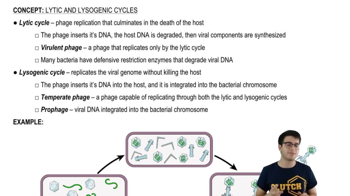
The lysogenic cycle is a viral replication cycle where viral DNA integrates into the host genome as a prophage and replicates without killing the host.
The lytic cycle is a viral replication cycle that results in the destruction of the host cell and release of new viruses.
A pandemic is a global outbreak of a disease affecting large populations across multiple countries or continents.
Phage is short for bacteriophage, a virus that infects bacteria.
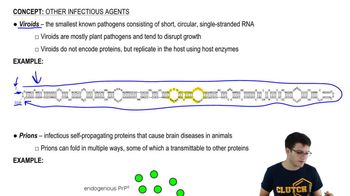
A prion is an infectious protein that causes neurodegenerative diseases without nucleic acids.
A prophage is viral DNA integrated into a bacterial chromosome during the lysogenic cycle.
A provirus is viral DNA integrated into a eukaryotic host genome, as seen in retroviruses.
Restriction enzymes cut DNA at specific sequences and are used by bacteria to defend against viruses.
A retrovirus is an RNA virus that uses reverse transcriptase to make DNA from its RNA genome.
Reverse transcriptase is an enzyme that synthesizes DNA from an RNA template, used by retroviruses.
A temperate phage can undergo both the lytic and lysogenic cycles.
A vaccine stimulates the immune system to recognize and fight specific viruses or pathogens.
The viral envelope is a lipid membrane surrounding some viruses, derived from the host cell membrane.
A virulent phage replicates only by the lytic cycle, destroying the host cell.