
Ch. 16 - The Molecular Basis of Inheritance
Campbell - Campbell Biology 12th Edition
Urry12th EditionCampbell BiologyISBN: 9785794169850당신이 사용하는 게 아니라요?교과서 변경
16장, 문제 8

The spontaneous loss of amino groups from adenine in DNA results in hypoxanthine, an uncommon base, opposite thymine. What combination of proteins could repair such damage?
a. Nuclease, DNA polymerase, DNA ligase
b. Telomerase, primase, DNA polymerase
c. Telomerase, helicase, single-strand binding protein
d. DNA ligase, replication fork proteins, adenylyl cyclase

검증된 단계별 안내
1
Identify the type of DNA damage: The problem describes the deamination of adenine, which results in the formation of hypoxanthine. This is a type of base modification that needs to be repaired to maintain DNA integrity.
Understand the repair mechanism: The repair of such base modifications typically involves a process called base excision repair (BER). This process is responsible for removing and replacing damaged bases in DNA.
Determine the role of each protein: In base excision repair, a nuclease first removes the damaged base by cleaving the glycosidic bond, creating an abasic site. Then, DNA polymerase fills in the correct nucleotide, and DNA ligase seals the nick in the DNA backbone.
Evaluate the options: Option (a) includes nuclease, DNA polymerase, and DNA ligase, which are the key proteins involved in base excision repair. The other options include proteins that are not directly involved in repairing base modifications.
Conclude the correct combination: Based on the understanding of base excision repair, the combination of proteins that could repair the damage caused by the deamination of adenine to hypoxanthine is option (a): nuclease, DNA polymerase, DNA ligase.

비슷한 문제에 대한 검증된 영상 답변:

이 영상 해법은 위 문제에 도움이 된다고 튜터들이 추천한 것입니다.
영상 길이:
2m

주요 개념

질문에 올바르게 답하기 위해 반드시 이해해야 하는 핵심 개념들은 다음과 같습니다.

DNA Damage and Repair

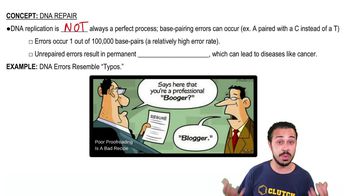
DNA damage refers to alterations in the DNA structure, such as the loss of amino groups from adenine, leading to the formation of hypoxanthine. Repair mechanisms are crucial to maintain genetic integrity, involving specific proteins that recognize and correct these errors to prevent mutations and ensure proper cellular function.
추천 영상:
03:20
DNA Repair

Base Excision Repair

Base excision repair (BER) is a cellular mechanism that fixes small, non-helix-distorting base lesions in DNA. It involves the removal of damaged bases by nucleases, followed by the synthesis of new DNA by DNA polymerase, and the sealing of the strand by DNA ligase. This process is essential for correcting spontaneous base modifications like the conversion of adenine to hypoxanthine.
추천 영상:
03:20
DNA Repair

Role of Repair Enzymes

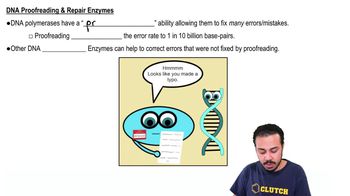
Repair enzymes such as nucleases, DNA polymerase, and DNA ligase play critical roles in DNA repair. Nucleases remove damaged or incorrect bases, DNA polymerase fills in the gaps with correct nucleotides, and DNA ligase seals the nicks in the DNA backbone. This coordinated action ensures the restoration of the DNA's original sequence and structural integrity.
추천 영상:
02:12
DNA Proofreading & Repair Enzymes