
Ch. 25 - The History of Life on Earth
Campbell - Campbell Biology 12th Edition
Urry12th EditionCampbell BiologyISBN: 9785794169850당신이 사용하는 게 아니라요?교과서 변경
25장, 문제 2

The oxygen revolution changed Earth's environment dramatically. Which of the following took advantage of the presence of free oxygen in the oceans and atmosphere?
a. The evolution of cellular respiration, which used oxygen to help harvest energy from organic molecules
b. The persistence of some animal groups in anaerobic habitats
c. The evolution of photosynthetic pigments that protected early algae from the corrosive effects of oxygen
d. The evolution of chloroplasts after early protists incorporated photosynthetic cyanobacteria

검증된 단계별 안내
1
Understand the context of the 'oxygen revolution': This refers to the Great Oxidation Event, which occurred around 2.4 billion years ago when oxygen levels in Earth's atmosphere and oceans increased significantly due to photosynthetic organisms like cyanobacteria.
Consider the impact of free oxygen: Oxygen is a highly reactive molecule that can be toxic to anaerobic organisms. However, it also allows for more efficient energy production through aerobic respiration.
Analyze option a: The evolution of cellular respiration is directly related to the presence of oxygen. Aerobic respiration uses oxygen to extract more energy from organic molecules compared to anaerobic processes.
Evaluate option b: While some organisms persisted in anaerobic environments, this option does not describe taking advantage of free oxygen, but rather avoiding it.
Assess options c and d: Photosynthetic pigments and chloroplast evolution are related to photosynthesis, which produces oxygen, but they do not directly take advantage of free oxygen for energy extraction like cellular respiration does.

비슷한 문제에 대한 검증된 영상 답변:

이 영상 해법은 위 문제에 도움이 된다고 튜터들이 추천한 것입니다.
영상 길이:
49s

주요 개념

질문에 올바르게 답하기 위해 반드시 이해해야 하는 핵심 개념들은 다음과 같습니다.

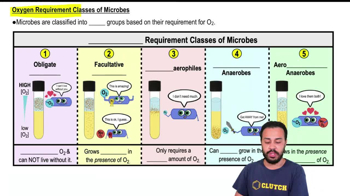
Oxygen Revolution

The Oxygen Revolution, also known as the Great Oxidation Event, occurred around 2.4 billion years ago when cyanobacteria began producing oxygen through photosynthesis. This led to a significant increase in atmospheric oxygen, transforming Earth's environment and enabling the evolution of aerobic organisms that could utilize oxygen for energy production.
추천 영상:
07:27
Oxygen Requirement Classes of Microbes

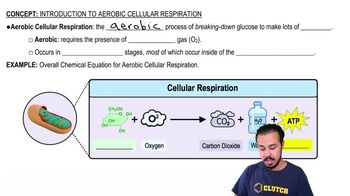
Cellular Respiration

Cellular respiration is a metabolic process where cells convert biochemical energy from nutrients into adenosine triphosphate (ATP), and release waste products. This process, particularly aerobic respiration, uses oxygen to efficiently extract energy from organic molecules, making it a crucial adaptation following the rise in atmospheric oxygen levels.
추천 영상:
03:39
Introduction to Cellular Respiration

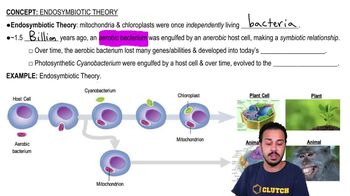
Endosymbiotic Theory

The endosymbiotic theory explains the origin of eukaryotic cell organelles like mitochondria and chloroplasts. It suggests that these organelles were once free-living bacteria that were engulfed by ancestral eukaryotic cells. This theory is supported by the presence of their own DNA and double membranes, and it is key to understanding the evolution of complex life forms, including the development of chloroplasts from cyanobacteria.
추천 영상:
06:58
Endosymbiotic Theory
관련 실천