Ch. 37 - Soil and Plant Nutrition
Campbell - Campbell Biology 12th Edition
Urry12th EditionCampbell BiologyISBN: 9785794169850당신이 사용하는 게 아니라요?교과서 변경
37장, 문제 6

A mineral deficiency is likely to affect older leaves more than younger leaves if
a. The mineral is a micronutrient
b. The mineral is very mobile within the plant
c. The mineral is required for chlorophyll synthesis
d. The mineral is a macronutrient

검증된 단계별 안내
1
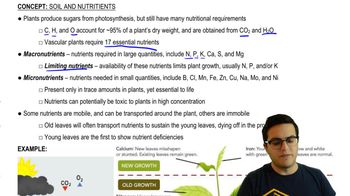
Understand the concept of mineral mobility in plants: Minerals that are mobile can be transported from older leaves to younger leaves when there is a deficiency.
Identify the characteristics of mobile minerals: Mobile minerals are typically those that can be relocated within the plant to support new growth, often affecting older leaves first.
Consider the role of older leaves: Older leaves may show deficiency symptoms first if the plant reallocates mobile minerals to younger, growing tissues.
Analyze the options: Determine which option describes a scenario where older leaves are affected due to mineral mobility.
Conclude based on mobility: The correct answer will be the one that indicates the mineral is mobile, as this would lead to older leaves showing deficiency symptoms first.

비슷한 문제에 대한 검증된 영상 답변:

이 영상 해법은 위 문제에 도움이 된다고 튜터들이 추천한 것입니다.
영상 길이:
3m

주요 개념

질문에 올바르게 답하기 위해 반드시 이해해야 하는 핵심 개념들은 다음과 같습니다.

Mineral Mobility in Plants

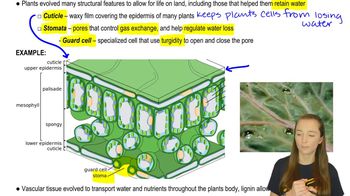
Mineral mobility refers to the ability of a mineral to move from older to younger tissues within a plant. Mobile minerals, such as nitrogen, phosphorus, and potassium, can be relocated to new growth areas when there is a deficiency, often affecting older leaves first. Understanding mineral mobility helps explain why older leaves show deficiency symptoms before younger ones.
추천 영상:
12:57
Land Plants - 2

Role of Minerals in Chlorophyll Synthesis

Chlorophyll synthesis is crucial for photosynthesis, and certain minerals like magnesium and iron are essential for this process. A deficiency in these minerals can lead to chlorosis, where leaves turn yellow due to insufficient chlorophyll. If a mineral required for chlorophyll synthesis is deficient, it can significantly impact plant health and growth.
추천 영상:
08:24
Food and Feeding

Macronutrients vs. Micronutrients

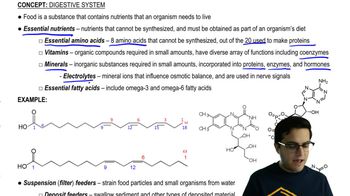
Macronutrients are nutrients required by plants in larger quantities, such as nitrogen, phosphorus, and potassium, while micronutrients are needed in smaller amounts, like iron, manganese, and zinc. Both types are vital for plant growth, but their required quantities and roles differ. Understanding the distinction helps in diagnosing and addressing nutrient deficiencies in plants.
추천 영상:
03:25
Soil Nutrients
관련 실천
교과서 질문

Epiphytes are:

a. Fungi that attack plants

b. Fungi that form mutualistic associations with roots

c. Nonphotosynthetic parasitic plants.

d. Plants that grow on other plants.

981
views
교과서 질문

Two groups of tomatoes were grown under laboratory conditions, one with humus added to the soil and one as a control without humus. The leaves of the plants grown without humus were yellowish (less green) compared with those of the plants grown in humus-enriched soil. The best explanation is that

a. The healthy plants used the food in the decomposing leaves of the humus for energy to make chlorophyll.

b. The humus made the soil more loosely packed, so water penetrated more easily to the roots.

c. The humus contained minerals such as magnesium and iron needed for the synthesis of chlorophyll.

d. The heat released by the decomposing leaves of the humus caused more rapid growth and chlorophyll synthesis.

1189
views
교과서 질문

The specific relationship between a legume and its mutualistic Rhizobium strain probably depends on:

a. Each legume having a chemical dialogue with a fungus

b. Each Rhizobium strain having a form of nitrogenase that works only in the appropriate legume host

c. Each legume being found where the soil has only the Rhizobium specific to that legume

d. Specific recognition between chemical signals and signal receptors of the Rhizobium strain and legume species

1016
views
교과서 질문

The greatest difference in health between two groups of plants of the same species, one group with mycorrhizae and one group without mycorrhizae, would be in an environment

a. Where nitrogen-fixing bacteria are abundant

b. That has soil with poor drainage

c. That has hot summers and cold winters

d. In which the soil is relatively deficient in mineral nutrients

974
views
교과서 질문

Some of the problems associated with intensive irrigation include all of the following except:

a. Soil salinization

b. Overfertilization

c. Land subsidence

d. Aquifer depletion.

748
views
교과서 질문

A problem with intensive irrigation is

a. Overfertilization.

b. Aquifer depletion.

c. The long-term depletion of soil oxygen.

d. The clogging of waterways by vegetation debris.

1372
views
1
rank