Ch. 37 - Soil and Plant Nutrition
Campbell - Campbell Biology 11th Edition
Urry11th EditionCampbell BiologyISBN: 9789357423311당신이 사용하는 게 아니라요?교과서 변경
37장, 문제 8

Two groups of tomatoes were grown under laboratory conditions, one with humus added to the soil and one as a control without humus. The leaves of the plants grown without humus were yellowish (less green) compared with those of the plants grown in humus-enriched soil. The best explanation is that
a. The healthy plants used the food in the decomposing leaves of the humus for energy to make chlorophyll.
b. The humus made the soil more loosely packed, so water penetrated more easily to the roots.
c. The humus contained minerals such as magnesium and iron needed for the synthesis of chlorophyll.
d. The heat released by the decomposing leaves of the humus caused more rapid growth and chlorophyll synthesis.

검증된 단계별 안내
1
Identify the main difference between the two groups of tomato plants: one group was grown with humus in the soil, and the other was grown without humus.
Observe the condition of the plants: the plants grown without humus had yellowish leaves, indicating a lack of chlorophyll.
Recall that chlorophyll synthesis in plants requires certain minerals, such as magnesium and iron, which are essential components of chlorophyll molecules.
Consider the role of humus in soil: humus is known to improve soil fertility by providing essential nutrients and minerals that plants need for growth and development.
Conclude that the most likely explanation for the difference in leaf color is that the humus-enriched soil provided necessary minerals like magnesium and iron, which are crucial for chlorophyll synthesis, making option c the best explanation.

비슷한 문제에 대한 검증된 영상 답변:

이 영상 해법은 위 문제에 도움이 된다고 튜터들이 추천한 것입니다.
영상 길이:
2m

주요 개념

질문에 올바르게 답하기 위해 반드시 이해해야 하는 핵심 개념들은 다음과 같습니다.

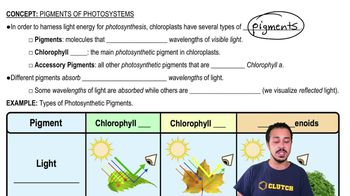
Chlorophyll Synthesis

Chlorophyll is a green pigment crucial for photosynthesis, allowing plants to absorb light energy. Its synthesis requires specific nutrients, including magnesium and iron, which are essential components of the chlorophyll molecule. Without these nutrients, plants may exhibit yellowing leaves due to insufficient chlorophyll production, impacting their ability to photosynthesize effectively.
추천 영상:
05:58
Pigments of Photosynthesis

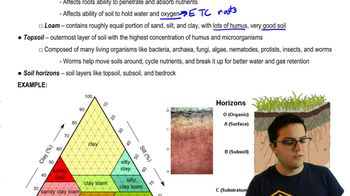
Role of Humus in Soil

Humus is the organic component of soil, formed by the decomposition of leaves and other plant material. It enhances soil fertility by improving nutrient content and soil structure, facilitating better water retention and root penetration. Humus can supply essential minerals and nutrients, such as magnesium and iron, which are vital for plant growth and chlorophyll synthesis.
추천 영상:
06:13
Soil Composition

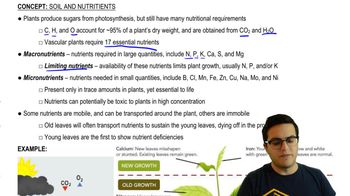
Nutrient Availability and Plant Health

Plants require a range of nutrients for optimal growth, including macronutrients like nitrogen, phosphorus, and potassium, and micronutrients like magnesium and iron. These nutrients are absorbed from the soil and are critical for various physiological processes, including chlorophyll production. A deficiency in these nutrients can lead to poor plant health, manifesting as yellowing leaves and stunted growth.
추천 영상:
03:25
Soil Nutrients
관련 실천