
Ch. 10 - Photosynthesis
Freeman - Biological Science 8th Edition
Freeman8th EditionBiological ScienceISBN: 9780138276263당신이 사용하는 게 아니라요?교과서 변경
10장, 문제 6

Describe the three phases of the Calvin cycle and how the products of the light-capturing reactions participate in this process.

검증된 단계별 안내
1
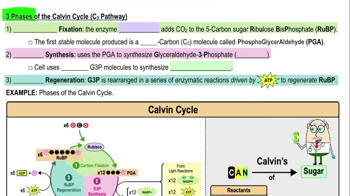
Step 1: The first phase of the Calvin cycle is carbon fixation. In this phase, the enzyme RuBisCO incorporates carbon dioxide into an organic molecule, 3-PGA. This is a crucial step in the process of photosynthesis, as it is the first step in converting inorganic carbon into organic molecules that can be used by the plant.
Step 2: The second phase of the Calvin cycle is reduction. In this phase, ATP and NADPH from the light-dependent reactions are used to convert 3-PGA into G3P. This is a two-step process: first, ATP is used to phosphorylate 3-PGA, and then NADPH donates electrons to the phosphorylated compound, reducing it to G3P. One molecule of G3P is output from the cycle to be used by the plant, while the rest continue to the next phase.
Step 3: The third phase of the Calvin cycle is regeneration. In this phase, the remaining G3P molecules are rearranged into RuBP, the molecule that accepts CO2 in the first phase of the cycle. This process requires ATP from the light-dependent reactions.
Step 4: The products of the light-capturing reactions, ATP and NADPH, are crucial for the Calvin cycle. ATP provides the energy needed for the reactions, while NADPH provides the electrons needed for the reduction of 3-PGA to G3P.
Step 5: The Calvin cycle is a continuous process, with the product of the last phase (RuBP) being used in the first phase to accept more CO2. This allows the plant to continuously convert inorganic carbon into organic molecules.

비슷한 문제에 대한 검증된 영상 답변:

이 영상 해법은 위 문제에 도움이 된다고 튜터들이 추천한 것입니다.
영상 길이:
4m

주요 개념

질문에 올바르게 답하기 위해 반드시 이해해야 하는 핵심 개념들은 다음과 같습니다.

Calvin Cycle Phases

The Calvin cycle consists of three main phases: carbon fixation, reduction, and regeneration. In carbon fixation, carbon dioxide is incorporated into a five-carbon sugar, ribulose bisphosphate (RuBP), by the enzyme RuBisCO. During the reduction phase, ATP and NADPH produced in the light reactions convert the fixed carbon into glyceraldehyde-3-phosphate (G3P). Finally, in the regeneration phase, some G3P molecules are used to regenerate RuBP, allowing the cycle to continue.
추천 영상:
10:58
3 Phases of the Calvin Cycle (C3 Pathway)

Light-Capturing Reactions

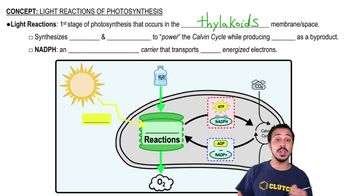
Light-capturing reactions occur in the thylakoid membranes of chloroplasts, where sunlight is absorbed by chlorophyll and other pigments. This energy is used to split water molecules, releasing oxygen and generating ATP and NADPH. These products are essential for the Calvin cycle, providing the energy and reducing power needed for the conversion of carbon dioxide into organic molecules.
추천 영상:
04:06
Light Reactions of Photosynthesis

Role of ATP and NADPH

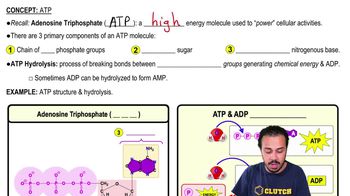
ATP and NADPH are crucial for the Calvin cycle as they supply the energy and electrons required for the reduction of 3-phosphoglycerate (3-PGA) to G3P. ATP provides the necessary energy for the phosphorylation of intermediates, while NADPH donates electrons to reduce 3-PGA. The efficient use of these molecules ensures that the cycle can effectively convert inorganic carbon into organic compounds, which are vital for plant growth and energy storage.
추천 영상: