Ch. 13 - Meiosis
Freeman - Biological Science 8th Edition
Freeman8th EditionBiological ScienceISBN: 9780138276263당신이 사용하는 게 아니라요?교과서 변경
13장, 문제 10b

A species of rotifer, a small freshwater invertebrate, lost the ability to reproduce sexually millions of years ago. A remarkable feature of its life cycle is the ability to withstand dry conditions. When the rotifer's environment dries out, so does the rotifer, and it can be blown to a new area. Rotifers that land in water will rehydrate and resume an active life. A major pathogen of these rotifers is a species of fungus that cannot survive drying. Some scientists hypothesize that drying rids the rotifers of this pathogen. Why might the ability to withstand drying reduce any potential advantage of sexual reproduction in this rotifer species?

검증된 단계별 안내
1
Understand the role of sexual reproduction: Sexual reproduction typically provides genetic diversity, which can be advantageous for adapting to changing environments or resisting pathogens.
Consider the rotifer's environment: The rotifer's ability to withstand drying and rehydrate in new areas means it can escape environments where pathogens are present, reducing the need for genetic diversity to combat these pathogens.
Evaluate the impact of drying on pathogens: Since the fungus pathogen cannot survive drying, the rotifers are naturally protected from this threat when they dry out, diminishing the need for sexual reproduction as a defense mechanism.
Analyze the trade-off: The rotifer's ability to survive drying and escape pathogens may outweigh the benefits of genetic diversity provided by sexual reproduction, making asexual reproduction more advantageous in this context.
Conclude the hypothesis: The ability to withstand drying likely reduces the advantage of sexual reproduction because the rotifers can avoid pathogens without needing genetic diversity, thus favoring asexual reproduction.

비슷한 문제에 대한 검증된 영상 답변:

이 영상 해법은 위 문제에 도움이 된다고 튜터들이 추천한 것입니다.
영상 길이:
2m

주요 개념

질문에 올바르게 답하기 위해 반드시 이해해야 하는 핵심 개념들은 다음과 같습니다.

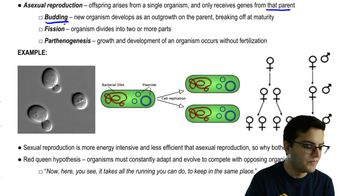
Asexual Reproduction

Asexual reproduction is a mode of reproduction where offspring are produced by a single organism without the involvement of gametes. This process results in genetically identical offspring, allowing rapid population growth and survival in stable environments. In rotifers, asexual reproduction eliminates the need for mates, which can be advantageous in fluctuating environments where finding a partner is challenging.
추천 영상:
05:44
Sexual and Asexual Reproduction

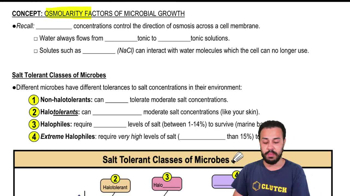
Desiccation Tolerance

Desiccation tolerance refers to an organism's ability to survive extreme drying conditions. Rotifers can enter a dormant state when their environment dries, allowing them to be transported to new locations by wind. Upon rehydration, they resume normal activity, which helps them escape pathogens like fungi that cannot survive desiccation, thus providing a survival advantage without the need for genetic diversity from sexual reproduction.
추천 영상:
06:30
Osmolarity Factors for Microbial Growth

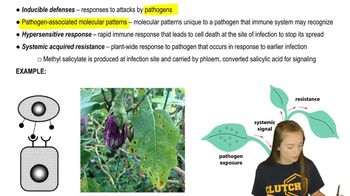
Pathogen Resistance

Pathogen resistance is the ability of an organism to withstand or eliminate infections by pathogens. In rotifers, desiccation acts as a natural defense mechanism against fungal pathogens that cannot survive drying. This reduces the evolutionary pressure to develop genetic diversity through sexual reproduction, as the rotifers can effectively rid themselves of pathogens by simply drying out and relocating.
추천 영상:
08:59
Pathogen Defenses
관련 실천
교과서 질문

Triploid (3n) watermelons, which are seedless, are produced by crossing a tetraploid (4n) strain with a diploid (2n) plant. Explain why this mating produces a triploid individual.

1099
views
교과서 질문

Meiosis results in independent assortment of egg-derived and sperm-derived chromosomes. If 2𝑛=4 for a given organism, and there is no crossing over, what is the chance that a gamete produced by this diploid organism will receive only sperm-derived chromosomes? In domestic cats, 2𝑛=38. What is the chance that a cat gamete contains only egg-derived chromosomes?

416
views
교과서 질문

Select True or False for each statement.

T/FLinked genes are always inherited together.

T/FGenetic map distances measure the number of nucleotides between a pair of genes.

T/FThe farther apart genes are on a chromosome, the more likely there is to be a crossover between these genes during meiosis.

T/FCrossing over occurs between genes on different homologs of a homologous chromosome pair.

1420
views
교과서 질문

A species of rotifer, a small freshwater invertebrate, lost the ability to reproduce sexually millions of years ago. A remarkable feature of its life cycle is the ability to withstand dry conditions. When the rotifer's environment dries out, so does the rotifer, and it can be blown to a new area. Rotifers that land in water will rehydrate and resume an active life. A major pathogen of these rotifers is a species of fungus that cannot survive drying. Some scientists hypothesize that drying rids the rotifers of this pathogen. Design an experimental study to test this hypothesis.

909
views