Ch. 13 - Meiosis
Freeman - Biological Science 8th Edition
Freeman8th EditionBiological ScienceISBN: 9780138276263당신이 사용하는 게 아니라요?교과서 변경
13장, 문제 2

What is an outcome of genetic recombination?
a. The synapsing of homologs during prophase of meiosis I
b. The new combination of maternal and paternal chromosome segments that results when homologs cross over
c. The new combinations of chromosome segments that result when self-fertilization occurs
d. The combination of a haploid phase and a diploid phase in a life cycle

검증된 단계별 안내
1
Understand the concept of genetic recombination: Genetic recombination is a process during which genetic material is rearranged, resulting in new combinations of alleles. This typically occurs during meiosis, specifically in prophase I, when homologous chromosomes pair up and exchange segments.
Analyze option a: The synapsing of homologs during prophase of meiosis I refers to the pairing of homologous chromosomes, which is a prerequisite for recombination but not the outcome itself.
Analyze option b: The new combination of maternal and paternal chromosome segments that results when homologs cross over is a direct outcome of genetic recombination. During crossing over, segments of DNA are exchanged between homologous chromosomes, creating new allele combinations.
Analyze option c: The new combinations of chromosome segments that result when self-fertilization occurs is not directly related to genetic recombination. Self-fertilization involves the fusion of gametes from the same individual, which may not necessarily involve recombination.
Analyze option d: The combination of a haploid phase and a diploid phase in a life cycle describes the alternation of generations, which is a broader concept in biology and not specifically an outcome of genetic recombination.

비슷한 문제에 대한 검증된 영상 답변:

이 영상 해법은 위 문제에 도움이 된다고 튜터들이 추천한 것입니다.
영상 길이:
3m

주요 개념

질문에 올바르게 답하기 위해 반드시 이해해야 하는 핵심 개념들은 다음과 같습니다.

Genetic Recombination

Genetic recombination is a process during meiosis where homologous chromosomes exchange genetic material. This occurs during prophase I of meiosis through a mechanism called crossing over. The result is a new combination of alleles on each chromosome, increasing genetic diversity in the offspring.
추천 영상:
가이드 코스
05:08
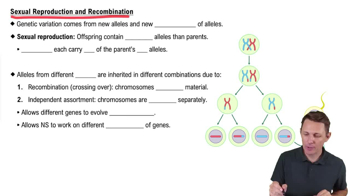
Sexual Reproduction and Recombination

Crossing Over

Crossing over is a crucial event in meiosis where homologous chromosomes pair up and exchange segments of their genetic material. This process occurs during prophase I and leads to genetic variation by producing new combinations of alleles, which are different from those found in either parent.
추천 영상:
02:05
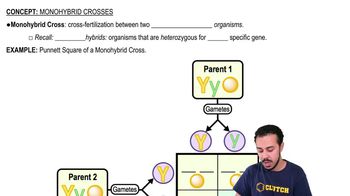
Monohybrid Crosses

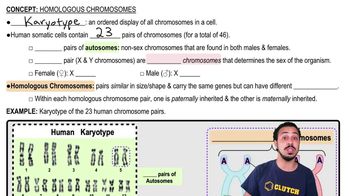
Homologous Chromosomes

Homologous chromosomes are pairs of chromosomes in a diploid organism that have the same structure and gene sequence, one inherited from each parent. During meiosis, these chromosomes pair up and can exchange genetic material through crossing over, contributing to genetic diversity in gametes.
추천 영상:
08:09
Homologous Chromosomes