

Ch. 40 - Water and Electrolyte Balance in Animals
Freeman - Biological Science 8th Edition
Freeman8th EditionBiological ScienceISBN: 9780138276263당신이 사용하는 게 아니라요?교과서 변경
40장, 문제 16f

Fish and other aquatic organisms are exposed to many types of water pollutants, including metals such as aluminum. Although a low level of aluminum is found in unpolluted water, many lakes and streams have an increased level because of mining, sewage treatment, and accidental spills of toxic materials. Aluminum pollution can result in mass fish die-offs.
Draw a graph similar to the one here showing how the results would be different if the experiment had been performed on marine bony fish in seawater. (Assume that the osmolarity of seawater is 1100 mOsm and the set point osmolarity of marine bony fishes is 290 mOsm.)

검증된 단계별 안내
1
Understand the context: Marine bony fish live in seawater, which has a higher osmolarity (1100 mOsm) compared to their internal set point osmolarity (290 mOsm). This means they are constantly working to maintain their internal osmotic balance.
Consider the effect of aluminum pollution: Aluminum can affect the gill function of fish, which is crucial for osmoregulation. In marine environments, this could lead to difficulties in excreting excess salts and maintaining water balance.
Determine the expected physiological response: If aluminum impairs gill function, marine bony fish might struggle to excrete excess salts, leading to an increase in their internal osmolarity closer to the external environment.
Sketch the graph: On the x-axis, represent the concentration of aluminum in the water. On the y-axis, represent the internal osmolarity of the fish. Start with a baseline at 290 mOsm and show a trend where increasing aluminum concentration leads to an increase in internal osmolarity.
Label the graph: Clearly label the axes, and include a legend if necessary to indicate that the graph represents the internal osmolarity of marine bony fish in response to aluminum pollution in seawater.

비슷한 문제에 대한 검증된 영상 답변:

이 영상 해법은 위 문제에 도움이 된다고 튜터들이 추천한 것입니다.
영상 길이:
1m

주요 개념

질문에 올바르게 답하기 위해 반드시 이해해야 하는 핵심 개념들은 다음과 같습니다.

Osmolarity

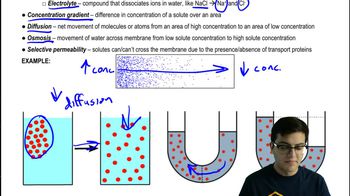
Osmolarity refers to the concentration of solutes in a solution, which affects the movement of water across cell membranes. In the context of marine bony fish, understanding osmolarity is crucial as it influences how these fish regulate their internal environment compared to the surrounding seawater, which has a higher osmolarity.
추천 영상:
07:59
Osmosis and Osmolarity

Marine Bony Fish Physiology

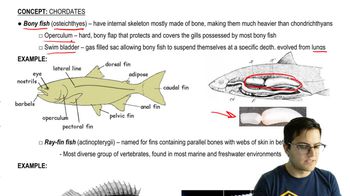
Marine bony fish have specialized physiological adaptations to maintain homeostasis in a high-salinity environment. They actively regulate their internal osmolarity to be lower than that of seawater, using mechanisms like ion transport and water balance to prevent dehydration and maintain cellular function.
추천 영상:
05:21
Bony Fish

Impact of Aluminum Pollution

Aluminum pollution can disrupt aquatic ecosystems by affecting fish health and survival. In fish, aluminum can interfere with gill function, impairing respiration and ion exchange, leading to stress and potentially mass die-offs. Understanding its impact is essential for assessing environmental risks and developing conservation strategies.
추천 영상:
03:35
Geographic Impact on Communities
관련 실천
교과서 질문

Fish and other aquatic organisms are exposed to many types of water pollutants, including metals such as aluminum. Although a low level of aluminum is found in unpolluted water, many lakes and streams have an increased level because of mining, sewage treatment, and accidental spills of toxic materials. Aluminum pollution can result in mass fish die-offs.

True or false: Water moves by osmosis across a fish's gills to an area with a higher sodium ion concentration because water molecules are attracted to the sodium ions.

528
views
교과서 질문

Fish and other aquatic organisms are exposed to many types of water pollutants, including metals such as aluminum. Although a low level of aluminum is found in unpolluted water, many lakes and streams have an increased level because of mining, sewage treatment, and accidental spills of toxic materials. Aluminum pollution can result in mass fish die-offs. The scientists also measured the activity of Na+/K+-ATPase in the gills of the fish exposed to aluminum and compared it to that of the control fish.

What do you suppose were their results? Explain.

522
views
교과서 질문

Fish and other aquatic organisms are exposed to many types of water pollutants, including metals such as aluminum. Although a low level of aluminum is found in unpolluted water, many lakes and streams have an increased level because of mining, sewage treatment, and accidental spills of toxic materials. Aluminum pollution can result in mass fish die-offs.

Why did the scientists do this experiment in a laboratory instead of simply collecting fish from a river with a high aluminum level and documenting their osmoregulatory ability?

466
views