
Ch. 50 - Behavioral Ecology
Freeman - Biological Science 8th Edition
Freeman8th EditionBiological ScienceISBN: 9780138276263당신이 사용하는 게 아니라요?교과서 변경
50장, 문제 15

<Image>
Mass strandings of whales occur on beaches near military exercises where sonar is used, raising concerns about the effects of human-generated underwater sounds on animal behavior. Scientists are collecting behavioral data on several species of whales to find out how sonar affects them.
The researchers also measured the speed and direction of whale swimming in response to the sound exposure. Whales increase their speed and swim away from the direction of sound. Design a study to test the hypothesis that this behavior leads to beach strandings. Note that you will not receive permission to conduct the study if your actions are likely to cause strandings to occur.

검증된 단계별 안내
1
Define the hypothesis clearly: The hypothesis is that the use of sonar causes whales to change their swimming behavior, leading to beach strandings.
Select a study area: Choose a location where whale strandings have been reported and where sonar is used, ensuring that the study does not interfere with the whales' natural behavior.
Identify the variables: The independent variable is the presence of sonar, and the dependent variable is the change in whale swimming behavior, including speed and direction, and the occurrence of strandings.
Develop a non-invasive method to collect data: Use passive acoustic monitoring to detect sonar use and GPS tagging to track whale movements, ensuring that the study does not increase the risk of strandings.
Analyze the data: Compare the swimming patterns and stranding events before, during, and after sonar exposure to determine if there is a correlation between sonar use and increased stranding events.

비슷한 문제에 대한 검증된 영상 답변:

이 영상 해법은 위 문제에 도움이 된다고 튜터들이 추천한 것입니다.
영상 길이:
2m

주요 개념

질문에 올바르게 답하기 위해 반드시 이해해야 하는 핵심 개념들은 다음과 같습니다.

Sonar and its Effects on Marine Life

Sonar, or Sound Navigation and Ranging, is a technique that uses sound waves to detect objects underwater. It can affect marine life, particularly whales, by disrupting their communication and navigation systems. The intense sound waves can cause stress and disorientation, leading to altered swimming patterns and potentially contributing to mass strandings.
추천 영상:
01:47
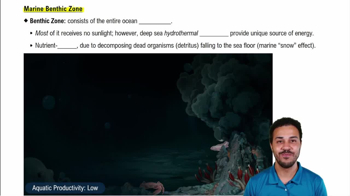
Marine Benthic Zone

Whale Behavior and Response to Sound

Whales rely heavily on sound for communication, navigation, and foraging. When exposed to loud, human-generated sounds like sonar, they may exhibit behaviors such as increased swimming speed and altered direction to escape the noise. Understanding these behavioral changes is crucial for assessing the impact of sonar on whale populations and their potential link to strandings.
추천 영상:
06:41
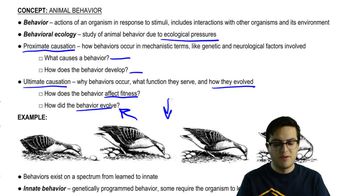
Behavior

Designing Ethical Scientific Studies

Designing a study to test hypotheses about whale strandings requires careful consideration of ethical guidelines to prevent harm. Researchers must ensure their methods do not increase the risk of strandings or distress to the animals. This involves using non-invasive techniques, such as observational studies or simulations, to gather data without directly exposing whales to harmful conditions.
추천 영상:
06:29
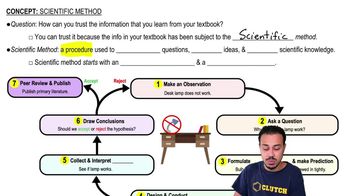
Scientific Method
관련 실천
교과서 질문

<Image>

Mass strandings of whales occur on beaches near military exercises where sonar is used, raising concerns about the effects of human-generated underwater sounds on animal behavior. Scientists are collecting behavioral data on several species of whales to find out how sonar affects them.

Researchers followed tagged blue whales to observe how they respond to simulated military sonar—using sound levels much lower than those typically used during military exercises. Analyze the sample of data below for one individual blue whale and summarize the behavioral effect of the sound exposure.

720
views
교과서 질문

<Image>

Mass strandings of whales occur on beaches near military exercises where sonar is used, raising concerns about the effects of human-generated underwater sounds on animal behavior. Scientists are collecting behavioral data on several species of whales to find out how sonar affects them.

Predict why the whale foraged at a depth of 100–170 m.

a. The whale learned to forage at this depth from its mother.

b. The whale had an innate instinct to feed at this depth.

c. The whale's food was most plentiful at this depth.

d. The whale could not dive any deeper than this depth.

703
views
교과서 질문

<Image>

Mass strandings of whales occur on beaches near military exercises where sonar is used, raising concerns about the effects of human-generated underwater sounds on animal behavior. Scientists are collecting behavioral data on several species of whales to find out how sonar affects them.

There are debates about what action the military should take to avoid harming the whales. How could you apply cost–benefit analysis to address this problem?

699
views
교과서 질문

<Image>

Mass strandings of whales occur on beaches near military exercises where sonar is used, raising concerns about the effects of human-generated underwater sounds on animal behavior. Scientists are collecting behavioral data on several species of whales to find out how sonar affects them.

Using the graph, estimate the number of minutes of foraging per hour before and after the sound exposure. Then predict the effect of sonar on the fitness of blue whales. Explain your reasoning.

619
views