Skip to main content
General Chemistry
나의 코스
배우기
시험 준비
AI 튜터
학습 가이드
교과서적 해결책
플래시카드
탐험해 보세요
앱을 사용해 보세요
나의 코스
배우기
시험 준비
AI 튜터
학습 가이드
교과서적 해결책
플래시카드
탐험해 보세요
앱을 사용해 보세요
뒤로
paste flashcard
카드를 뒤집기 위해 탭할 수 있습니다.
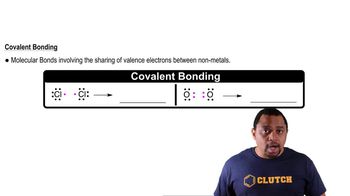
Primary difference between ionic and covalent bonds
카드를 뒤집기 위해 탭할 수 있습니다.
👆
Primary difference between ionic and covalent bonds
An
ionic bond
involves the transfer of electrons from one atom to another, while a
covalent bond
involves the sharing of electrons between atoms.
진행 상황 추적
컨트롤 버튼이 '내비게이션' 모드로 변경되었습니다.
1/6
추천 영상
VideoThumbView.guidedCourse
01:04
Chemical Bonds Example 3
6291
views
56
rank
VideoThumbView.guidedCourse
02:03
Chemical Bonds
7163
views
88
rank
2
comments
VideoThumbView.guidedCourse
01:18
Chemical Bonds Example 2
11764
views
108
rank
1
comments
이 집합의 용어 (6)
하이드의 정의
Primary difference between ionic and covalent bonds
An
ionic bond
involves the transfer of electrons from one atom to another, while a
covalent bond
involves the sharing of electrons between atoms.
Atomic number of an element with 11 protons
The
atomic number
is 11, which equals the number of protons in the element.
Mass number of an element with 11 protons and 12 neutrons
The
mass number
is 23, calculated as protons (11) plus neutrons (12).
Why do noble gases rarely form chemical bonds?
Noble gases have a
full valence electron shell
, making them stable and unlikely to react or form bonds.
Balanced chemical equation for hydrogen and oxygen forming water
The balanced equation is \(2H_2 + O_2 \rightarrow 2H_2O\).
pH indication of a substance turning pH strip bright red at pH 2
A pH of 2 indicates the substance is a
strong acid
.
 뒤로
뒤로
 01:04
01:04