Ch.18 - Chemistry of the Environment
Brown - Chemistry: The Central Science 14th Edition
Brown14th EditionChemistry: The Central ScienceISBN: 9780134414232당신이 사용하는 게 아니라요?교과서 변경
18장, 문제 31a

(a) Write a chemical equation that describes the attack of acid rain on limestone, CaCO3.

검증된 단계별 안내
1
Step 1: Understand the components involved in the reaction. Acid rain typically contains sulfuric acid (H2SO4) or nitric acid (HNO3), which can react with limestone (CaCO3).
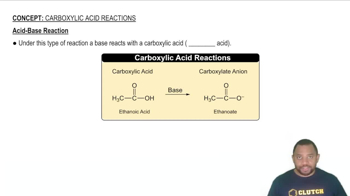
Step 2: Identify the type of chemical reaction. The reaction between an acid and a carbonate is a typical acid-base reaction that produces carbon dioxide (CO2), water (H2O), and a salt.
Step 3: Write the balanced chemical equation for the reaction between sulfuric acid and calcium carbonate. The general form of the reaction is: CaCO3+H2SO4→CaSO4+CO2+H2O
Step 4: Verify the balance of the chemical equation. Ensure that the number of atoms for each element is equal on both sides of the equation.
Step 5: Consider the environmental implications. Discuss how the reaction contributes to the erosion of limestone structures and the release of CO2 into the atmosphere.

비슷한 문제에 대한 검증된 영상 답변:

이 영상 해법은 위 문제에 도움이 된다고 튜터들이 추천한 것입니다.
영상 길이:
4m

주요 개념

질문에 올바르게 답하기 위해 반드시 이해해야 하는 핵심 개념들은 다음과 같습니다.

Acid-Base Reactions

Acid-base reactions involve the transfer of protons (H+) between reactants. In the context of acid rain, which contains sulfuric and nitric acids, these acids react with basic substances like calcium carbonate (CaCO3) found in limestone. This reaction is crucial for understanding how acid rain can lead to the dissolution of limestone.
추천 영상:
가이드 코스
01:09
Acid-Base Reaction

Chemical Equations

A chemical equation represents a chemical reaction using symbols and formulas. It shows the reactants on the left and the products on the right, with coefficients indicating the number of molecules involved. Writing a balanced chemical equation for the reaction between acid rain and limestone is essential to illustrate the conservation of mass and the stoichiometry of the reaction.
추천 영상:
가이드 코스
01:32
Balancing Chemical Equations

Dissolution of Carbonates

The dissolution of carbonates, such as calcium carbonate, occurs when they react with acids, leading to the formation of soluble products. In the case of limestone reacting with acid rain, the reaction produces calcium ions (Ca2+) and carbon dioxide (CO2), which can be represented in the chemical equation. Understanding this process is key to grasping the environmental impact of acid rain on geological formations.
추천 영상:
가이드 코스
03:48
3 and 4 Carbon Alkyls