Detonation of nitroglycerin proceeds as follows: 4 C3H5N3O91l2¡ 12 CO21g2 + 6 N21g2 + O21g2 + 10 H2O1g2 (a) If a sample containing 2.00 mL of nitroglycerin 1density = 1.592 g>mL2 is detonated, how many moles of gas are produced?
Ch.3 - Chemical Reactions and Reaction Stoichiometry
3장, 문제 72b
The combustion of one mole of liquid octane, CH3(CH2)6CH3, produces 5470 kJ of heat. Calculate how much heat is produced if 1.000 gallon of octane is combusted.
검증된 단계별 안내1
Determine the density of octane, which is typically about 0.703 g/mL. This will help in converting the volume of octane (in gallons) to mass (in grams).
Convert the volume of octane from gallons to liters, knowing that 1 gallon is approximately 3.785 liters, and then to milliliters (1 liter = 1000 mL).
Calculate the mass of octane in grams using the volume in milliliters and the density (mass = density × volume).
Convert the mass of octane to moles using the molar mass of octane (C8H18), which is about 114 g/mol (mass in grams / molar mass).
Multiply the number of moles of octane by the heat produced per mole (5470 kJ/mole) to find the total heat produced when the given amount of octane is combusted.

비슷한 문제에 대한 검증된 영상 답변:
이 영상 해법은 위 문제에 도움이 된다고 튜터들이 추천한 것입니다.
영상 길이:
3m주요 개념
질문에 올바르게 답하기 위해 반드시 이해해야 하는 핵심 개념들은 다음과 같습니다.
Combustion Reaction
A combustion reaction is a chemical process in which a substance (usually a hydrocarbon) reacts with oxygen to produce carbon dioxide, water, and energy in the form of heat. In this case, the combustion of octane releases a significant amount of energy, quantified as 5470 kJ per mole of octane burned.
추천 영상:
가이드 코스
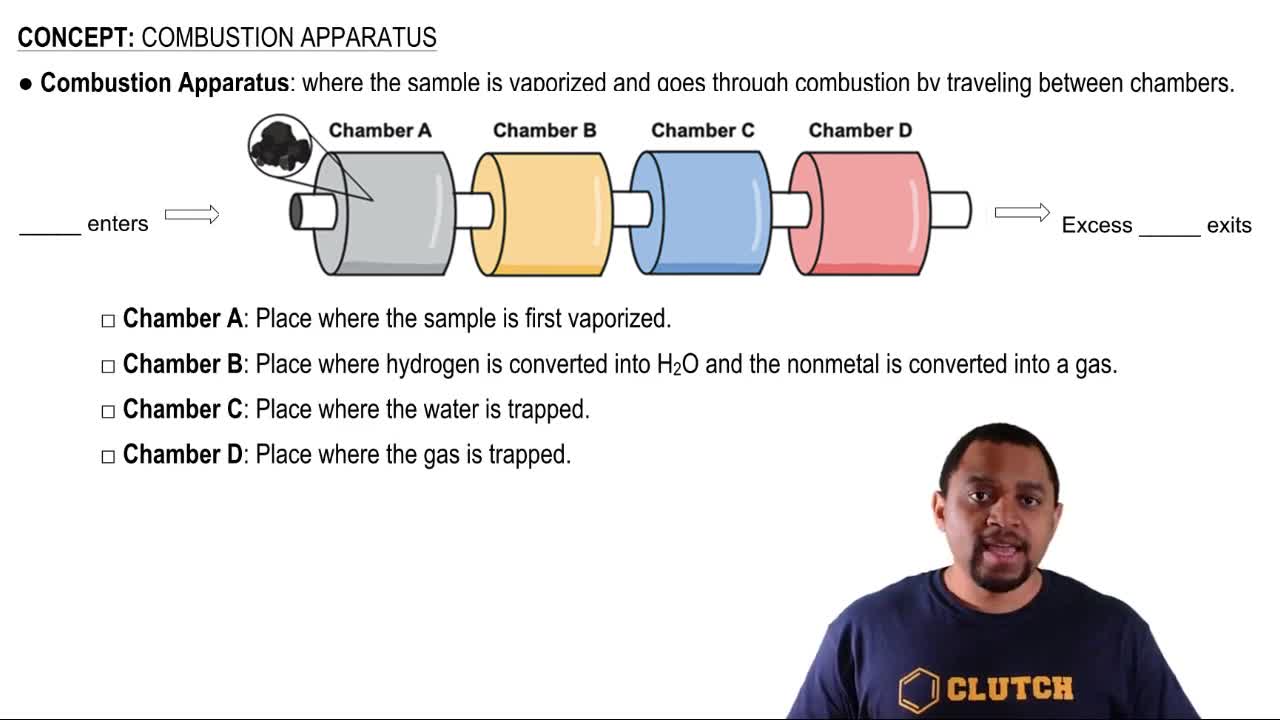
Combustion Apparatus
Molar Mass and Density
To calculate the heat produced from a specific volume of octane, it is essential to know its molar mass and density. The molar mass of octane (C8H18) is approximately 114.22 g/mol, and its density is about 0.703 g/mL. This information allows us to convert the volume of octane (in gallons) to mass (in grams) and then to moles.
추천 영상:
가이드 코스
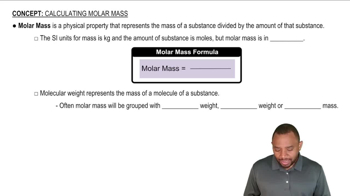
Molar Mass Concept
Heat Calculation
The total heat produced from the combustion of octane can be calculated using the formula: total heat = (moles of octane) x (heat produced per mole). After determining the number of moles from the mass of octane, multiplying by the heat released per mole provides the total energy output from the combustion process.
추천 영상:
가이드 코스
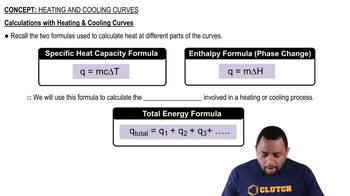
Calculations with Heating and Cooling Curves
관련 실천
교과서 질문
1208
views
1
rank
교과서 질문
(a) Define the terms limiting reactant and excess reactant.
1
views
교과서 질문
(c) Why should you base your choice of which compound is the limiting reactant on its number of initial moles, not on its initial mass in grams?
653
views
교과서 질문
The complete combustion of octane, C8H18, a component of gasoline, proceeds as follows: 2 C8H18(l) + 25 O2(g) → 16 CO2(g) + 18 H2O(g). (d) How many grams of CO2 are produced when 15.0 gal of C8H18 are combusted? (d) How many grams of CO2 are produced when 15.0 gal of C8H18 are combusted?
교과서 질문
(b) Why are the amounts of products formed in a reaction determined only by the amount of the limiting reactant?
507
views
