
The enzyme urease catalyzes the reaction of urea, (NH2CONH2), with water to produce carbon dioxide and ammonia. In water, without the enzyme, the reaction proceeds with a first-order rate constant of 4.15 × 10⁻⁵ s-1 at 100°C. In the presence of the enzyme in water, the reaction proceeds with a rate constant of 3.4 × 10⁴ s-1 at 21°C. (c) In actuality, what would you expect for the rate of the catalyzed reaction at 100°C as compared to that at 21°C?
Ch.14 - Chemical Kinetics

14장, 문제 81b
Many metallic catalysts, particularly the precious-metal ones, are often deposited as very thin films on a substance of high surface area per unit mass, such as alumina (Al2O3) or silica (SiO2). (b) How does the surface area affect the rate of reaction?
검증된 단계별 안내1
Step 1: Understand the role of catalysts. Catalysts are substances that increase the rate of a chemical reaction by providing an alternative reaction pathway with a lower activation energy. They do this by offering a surface where the reactants can come together to react.
Step 2: Recognize the importance of surface area. The greater the surface area of the catalyst, the more space there is for reactants to come into contact with the catalyst. This increases the number of successful collisions between reactant particles and the catalyst, which in turn increases the rate of reaction.
Step 3: Apply this understanding to the given problem. In the case of metallic catalysts deposited as thin films on substances like alumina or silica, the high surface area of these substances allows for more catalyst to be exposed to the reactants. This increases the number of successful collisions and thus the rate of reaction.
Step 4: Understand the practical implications. This is why catalysts are often deposited as thin films on high surface area substances - it allows for the most efficient use of often expensive catalyst materials, while maximizing the rate of reaction.
Step 5: Remember that while catalysts increase the rate of reaction, they do not affect the position of the equilibrium or the enthalpy change of the reaction. They simply allow the reaction to reach equilibrium more quickly.

비슷한 문제에 대한 검증된 영상 답변:
이 영상 해법은 위 문제에 도움이 된다고 튜터들이 추천한 것입니다.
영상 길이:
2m주요 개념
질문에 올바르게 답하기 위해 반드시 이해해야 하는 핵심 개념들은 다음과 같습니다.
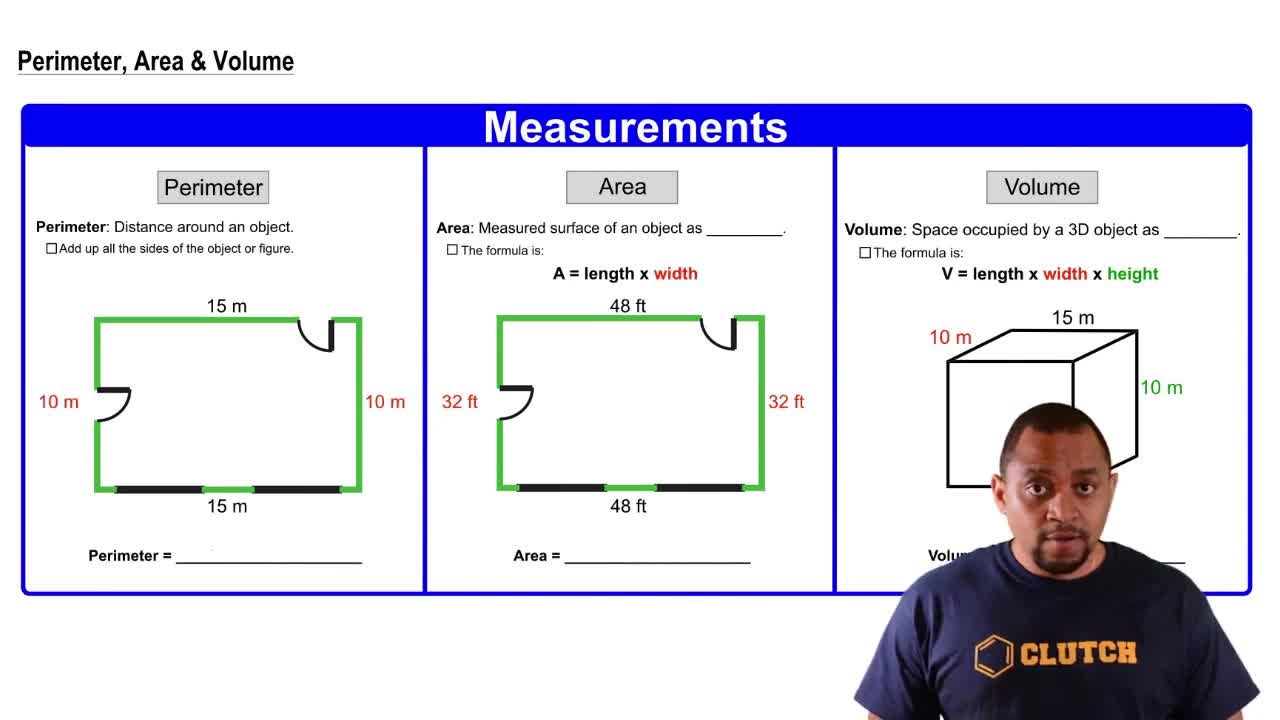
Surface Area to Volume Ratio
The surface area to volume ratio is a critical factor in chemical reactions, particularly for catalysts. A higher surface area allows more reactant molecules to interact with the catalyst at any given time, increasing the likelihood of collisions and, consequently, the rate of reaction. This principle is especially important in heterogeneous catalysis, where the catalyst is in a different phase than the reactants.
추천 영상:
가이드 코스
Perimeter, Area, Volume
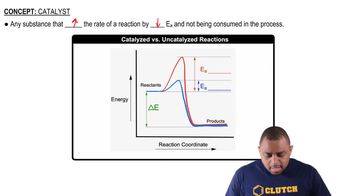
Catalysis
Catalysis refers to the process of increasing the rate of a chemical reaction by adding a substance known as a catalyst. Catalysts work by providing an alternative reaction pathway with a lower activation energy, allowing more reactant molecules to convert into products more quickly. In the context of metallic catalysts, their effectiveness is often enhanced by their high surface area, which facilitates more active sites for reactions.
추천 영상:
가이드 코스
Catalyzed vs. Uncatalyzed Reactions
Reaction Rate
The reaction rate is a measure of how quickly reactants are converted into products in a chemical reaction. It can be influenced by several factors, including concentration, temperature, and the presence of a catalyst. In the case of catalysts with high surface areas, the increased availability of active sites leads to a higher frequency of effective collisions, thereby accelerating the overall reaction rate.
추천 영상:
가이드 코스
Average Rate of Reaction
관련 실천
교과서 질문
2129
views
교과서 질문
The enzyme urease catalyzes the reaction of urea, (NH2CONH2), with water to produce carbon dioxide and ammonia. In water, without the enzyme, the reaction proceeds with a first-order rate constant of 4.15 × 10⁻⁵ s-1 at 100°C. In the presence of the enzyme in water, the reaction proceeds with a rate constant of 3.4 × 10⁴ s-1 at 21°C. (b) If the rate of the catalyzed reaction were the same at 100°C as it is at 21°C, what would be the difference in the activation energy between the catalyzed and uncatalyzed reactions?
2
views
교과서 질문
The addition of NO accelerates the decomposition of N2O, possibly by the following mechanism: NO1g2 + N2O1g2¡N21g2 + NO21g2 2 NO21g2¡2 NO1g2 + O21g2 (b) Is NO serving as a catalyst or an intermediate in this reaction?
955
views
