
Ch.15 - Chemical Equilibrium
15์žฅ, ๋ฌธ์ œ 51a

At 218ยฐC, ๐พ๐‘ = 1.2ร—10โˆ’4 for the equilibrium NH4SH(๐‘ ) โ‡Œ NH3(๐‘”) + H2S(๐‘”) (a) Calculate the equilibrium concentrations of NH3 and H2S if a sample of solid NH4SH is placed in a closed vessel at 218ยฐC and decomposes until equilibrium is reached.

๊ฒ€์ฆ๋œ ๋‹จ๊ณ„๋ณ„ ์•ˆ๋‚ด
1
Identify the equilibrium expression for the reaction: NH_4SH(s) โ‡Œ NH_3(g) + H_2S(g). Since NH_4SH is a solid, it does not appear in the equilibrium expression. Therefore, K_c = [NH_3][H_2S].
Let x be the equilibrium concentration of NH_3 and H_2S. Since the stoichiometry of the reaction is 1:1, [NH_3] = x and [H_2S] = x at equilibrium.
Substitute the equilibrium concentrations into the equilibrium expression: K_c = x * x = x^2.
Set the equilibrium constant equal to the expression: 1.2 \(\times\) 10^{-4} = x^2.
Solve for x by taking the square root of both sides to find the equilibrium concentrations of NH_3 and H_2S.

๋น„์Šทํ•œ ๋ฌธ์ œ์— ๋Œ€ํ•œ ๊ฒ€์ฆ๋œ ์˜์ƒ ๋‹ต๋ณ€:

์ด ์˜์ƒ ํ•ด๋ฒ•์€ ์œ„ ๋ฌธ์ œ์— ๋„์›€์ด ๋œ๋‹ค๊ณ  ํŠœํ„ฐ๋“ค์ด ์ถ”์ฒœํ•œ ๊ฒƒ์ž…๋‹ˆ๋‹ค.
์˜์ƒ ๊ธธ์ด:
2m

์ฃผ์š” ๊ฐœ๋…

์งˆ๋ฌธ์— ์˜ฌ๋ฐ”๋ฅด๊ฒŒ ๋‹ตํ•˜๊ธฐ ์œ„ํ•ด ๋ฐ˜๋“œ์‹œ ์ดํ•ดํ•ด์•ผ ํ•˜๋Š” ํ•ต์‹ฌ ๊ฐœ๋…๋“ค์€ ๋‹ค์Œ๊ณผ ๊ฐ™์Šต๋‹ˆ๋‹ค.

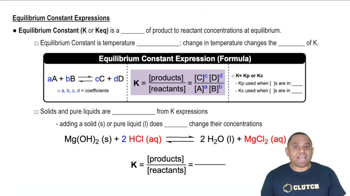
Equilibrium Constant (Kc)

The equilibrium constant (Kc) is a numerical value that expresses the ratio of the concentrations of products to reactants at equilibrium for a given reaction at a specific temperature. For the reaction NHโ‚„SH(s) โ‡Œ NHโ‚ƒ(g) + Hโ‚‚S(g), Kc = [NHโ‚ƒ][Hโ‚‚S] / [NHโ‚„SH]. Since NHโ‚„SH is a solid, its concentration does not appear in the expression, simplifying the calculation of equilibrium concentrations.
์ถ”์ฒœ ์˜์ƒ:
๊ฐ€์ด๋“œ ์ฝ”์Šค
03:20
Equilibrium Constant Expressions

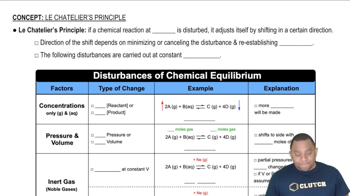
Le Chatelier's Principle

Le Chatelier's Principle states that if a system at equilibrium is disturbed by a change in concentration, temperature, or pressure, the system will adjust to counteract the disturbance and restore a new equilibrium. In this case, the introduction of solid NHโ‚„SH will shift the equilibrium position to favor the formation of NHโ‚ƒ and Hโ‚‚S until the concentrations stabilize according to the Kc value.
์ถ”์ฒœ ์˜์ƒ:

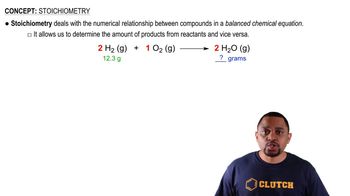
Stoichiometry of the Reaction

Stoichiometry involves the quantitative relationships between the reactants and products in a chemical reaction. For the decomposition of NHโ‚„SH, the stoichiometry indicates that one mole of NHโ‚„SH produces one mole of NHโ‚ƒ and one mole of Hโ‚‚S. This relationship is crucial for calculating the equilibrium concentrations based on the initial amount of solid NHโ‚„SH and the changes that occur as the system reaches equilibrium.
์ถ”์ฒœ ์˜์ƒ: