
Ch.18 - Chemistry of the Environment
Brown - Chemistry: The Central Science 15th Edition
Brown15th EditionChemistry: The Central ScienceISBN: 9780137542970당신이 사용하는 게 아니라요?교과서 변경
18장, 문제 1c

At 273 K and 1 atm pressure, 1 mol of an ideal gas occupies 22.4 L. (Section 10.4) (c) In which parts of the atmosphere would you expect gases to behave most ideally (ignoring any photochemical reactions)? [Section 18.1]

검증된 단계별 안내
1
insert step 1> Identify the conditions under which gases behave ideally. Ideal gas behavior is most closely approximated under conditions of high temperature and low pressure.
insert step 2> Consider the layers of the atmosphere: troposphere, stratosphere, mesosphere, and thermosphere.
insert step 3> Analyze the temperature and pressure conditions in each layer.
insert step 4> Recognize that the upper layers of the atmosphere, such as the thermosphere, have lower pressure and higher temperatures compared to the lower layers.
insert step 5> Conclude that gases are likely to behave most ideally in the upper layers of the atmosphere, such as the thermosphere, due to the low pressure and high temperature conditions.

비슷한 문제에 대한 검증된 영상 답변:

이 영상 해법은 위 문제에 도움이 된다고 튜터들이 추천한 것입니다.
영상 길이:
5m

주요 개념

질문에 올바르게 답하기 위해 반드시 이해해야 하는 핵심 개념들은 다음과 같습니다.

Ideal Gas Law

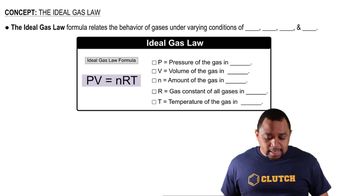
The Ideal Gas Law is a fundamental equation in chemistry that relates the pressure, volume, temperature, and number of moles of an ideal gas. It is expressed as PV = nRT, where P is pressure, V is volume, n is the number of moles, R is the ideal gas constant, and T is temperature in Kelvin. This law helps predict the behavior of gases under various conditions, particularly at low pressures and high temperatures.
추천 영상:
가이드 코스
01:15
Ideal Gas Law Formula

Conditions for Ideal Gas Behavior

Gases behave most ideally under conditions of low pressure and high temperature. At low pressures, gas molecules are far apart, reducing intermolecular forces, while high temperatures provide sufficient kinetic energy to overcome these forces. In the atmosphere, regions with lower pressure and higher temperatures, such as the upper troposphere, are where gases are expected to behave more ideally.
추천 영상:
가이드 코스
01:15
Ideal Gas Law Formula

Atmospheric Layers

The atmosphere is divided into several layers, each characterized by different temperature and pressure conditions. The troposphere, stratosphere, mesosphere, and thermosphere have varying altitudes and properties. In the upper layers, particularly the stratosphere, the pressure is lower, which contributes to more ideal gas behavior compared to the denser, lower layers of the atmosphere.
추천 영상:
가이드 코스
08:52
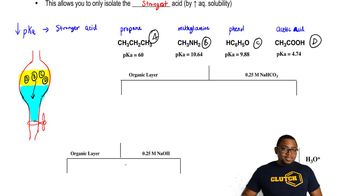
Acid-Base Extraction