Ch.7 - Periodic Properties of the Elements
Brown - Chemistry: The Central Science 15th Edition
Brown15th EditionChemistry: The Central ScienceISBN: 9780137542970당신이 사용하는 게 아니라요?교과서 변경
7장, 문제 26b

Using only the periodic table, arrange each set of atoms in order of increasing radius. b. In, Sn, As

검증된 단계별 안내
1
Identify the position of each element on the periodic table: Indium (In), Tin (Sn), and Arsenic (As) are all located in period 5, but in different groups.
Recall the periodic trend: Atomic radius increases as you move down a group and decreases as you move across a period from left to right.
Compare the elements based on their group positions: In (Group 13), Sn (Group 14), and As (Group 15).
Since all elements are in the same period, the atomic radius decreases from left to right across the period.
Arrange the elements in order of increasing atomic radius: As, Sn, In.

비슷한 문제에 대한 검증된 영상 답변:

이 영상 해법은 위 문제에 도움이 된다고 튜터들이 추천한 것입니다.
영상 길이:
3m

주요 개념

질문에 올바르게 답하기 위해 반드시 이해해야 하는 핵심 개념들은 다음과 같습니다.

Atomic Radius

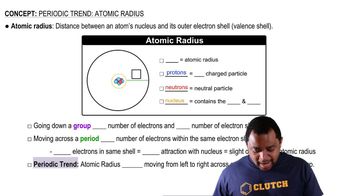
Atomic radius is a measure of the size of an atom, typically defined as the distance from the nucleus to the outermost electron shell. It generally increases down a group in the periodic table due to the addition of electron shells, while it decreases across a period from left to right due to increased nuclear charge, which pulls electrons closer to the nucleus.
추천 영상:

Periodic Trends

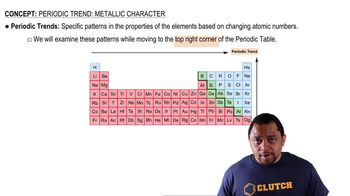
Periodic trends refer to predictable patterns in the properties of elements as you move across or down the periodic table. Key trends include atomic radius, ionization energy, and electronegativity. Understanding these trends helps in predicting the behavior of elements and their compounds, including how they compare in size.
추천 영상:
가이드 코스
00:38
Periodic Trends

Element Classification

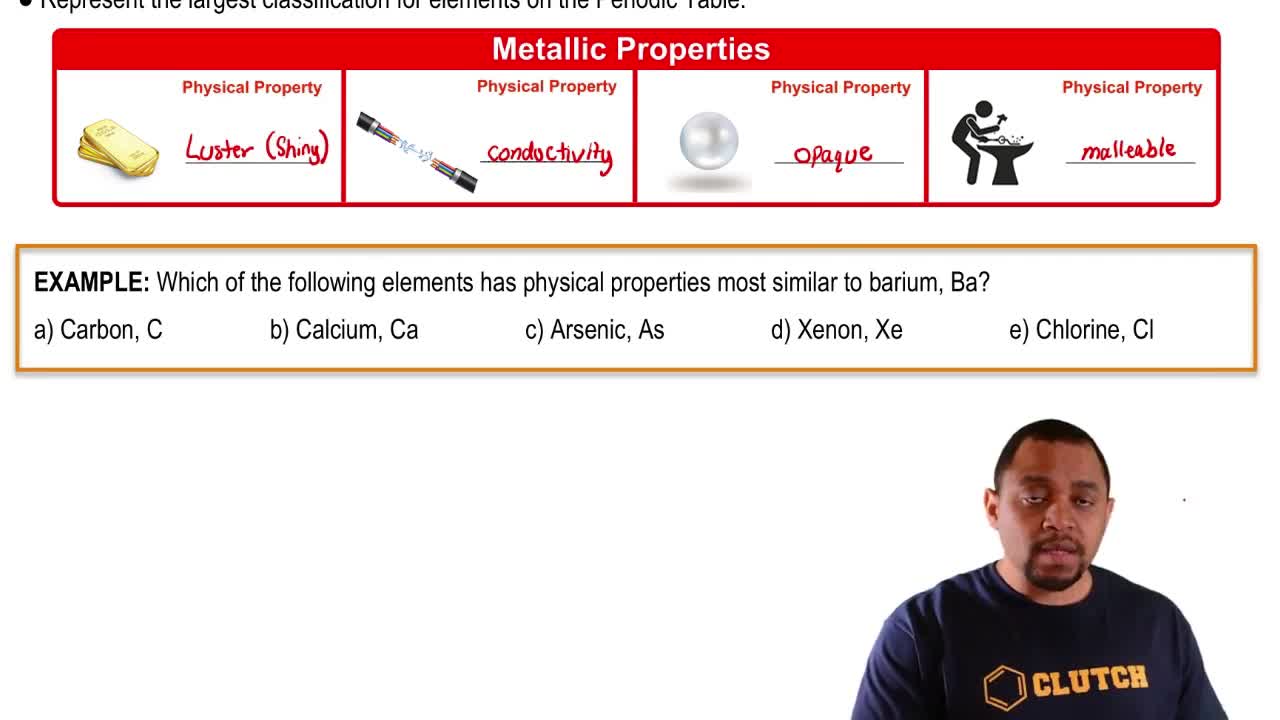
Elements in the periodic table are classified into groups and periods based on their properties. For example, In (Indium), Sn (Tin), and As (Arsenic) belong to different groups, with Indium and Tin being metals and Arsenic being a metalloid. This classification affects their atomic radii and helps in understanding their relative sizes.
추천 영상:
가이드 코스
01:39
Element Classification Example