

Ch.14 - Chemical Kinetics
McMurry - Chemistry 8th Edition
McMurry8th EditionChemistryISBN: 9781292336145당신이 사용하는 게 아니라요?교과서 변경
14장, 문제 122

The rate of the reaction A + B2 S AB + B is directly proportional to the concentration of B2, independent of the concentration of A, and directly proportional to the concentration of a substance C. (c) What is the role of C in this reaction? Why doesn't C appear in the chemical equation for the overall reaction?

검증된 단계별 안내
1
insert step 1: Understand the role of C in the reaction. Since the rate of the reaction is directly proportional to the concentration of C, C acts as a catalyst. Catalysts increase the rate of a reaction without being consumed in the process.
insert step 2: Recognize that catalysts do not appear in the overall balanced chemical equation. This is because they are not reactants or products; they are present at the start and end of the reaction in the same form.
insert step 3: Consider the mechanism of the reaction. C may participate in one or more steps of the reaction mechanism, forming an intermediate that speeds up the reaction, but it is regenerated by the end of the reaction.
insert step 4: Understand that the presence of C affects the rate law of the reaction. The rate law is an expression that shows how the rate depends on the concentration of reactants and catalysts. In this case, the rate law includes the concentration of C, indicating its catalytic role.
insert step 5: Conclude that C is a catalyst because it increases the reaction rate without being consumed, and it does not appear in the overall reaction equation because it is not a reactant or product.

비슷한 문제에 대한 검증된 영상 답변:

이 영상 해법은 위 문제에 도움이 된다고 튜터들이 추천한 것입니다.
영상 길이:
2m

주요 개념

질문에 올바르게 답하기 위해 반드시 이해해야 하는 핵심 개념들은 다음과 같습니다.

Reaction Rate

The reaction rate refers to the speed at which reactants are converted into products in a chemical reaction. It is influenced by various factors, including the concentration of reactants, temperature, and the presence of catalysts. In this case, the rate is directly proportional to the concentration of B2 and substance C, indicating that these species play a significant role in determining how quickly the reaction occurs.
추천 영상:
가이드 코스
02:03
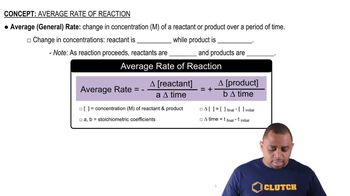
Average Rate of Reaction

Catalysts

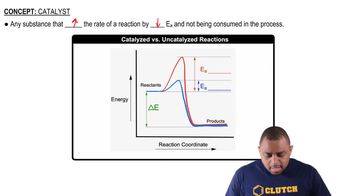
A catalyst is a substance that increases the rate of a chemical reaction without being consumed in the process. It provides an alternative pathway for the reaction with a lower activation energy. In the context of this question, substance C may act as a catalyst, facilitating the reaction between A and B2, which explains its influence on the reaction rate without appearing in the overall balanced equation.
추천 영상:
가이드 코스
01:59
Catalyzed vs. Uncatalyzed Reactions

Chemical Equations

Chemical equations represent the reactants and products of a reaction, showing their stoichiometric relationships. Not all substances involved in a reaction are included in the balanced equation; intermediates or catalysts may not appear because they do not change the overall composition of the reactants and products. This is why substance C, while affecting the reaction rate, does not appear in the final equation for the reaction.
추천 영상:
가이드 코스
01:32
Balancing Chemical Equations