
Ch.18 - Thermodynamics: Entropy, Free Energy & Equilibrium
McMurry - Chemistry 8th Edition
McMurry8th EditionChemistryISBN: 9781292336145당신이 사용하는 게 아니라요?교과서 변경
18장, 문제 2

Which of the following reactions has ∆Ssys> 0? (a) N2(g) + 3H2(g) -> 2NH3(g) (b) Ag+(aq) + Cl-(aq) -> AgCl(s) (c) 2H2O2(aq) -> 2H2O(l) + O2(g) (d) 2I(g) -> I2(g)

검증된 단계별 안내
1
Identify the change in the number of moles of gas in each reaction, as this often indicates a change in entropy (∆S).
For reaction (a), N2(g) + 3H2(g) -> 2NH3(g), note the decrease in the number of moles of gas from 4 to 2, suggesting ∆Ssys < 0.
For reaction (b), Ag+(aq) + Cl-(aq) -> AgCl(s), observe the formation of a solid from aqueous ions, indicating a decrease in disorder, so ∆Ssys < 0.
For reaction (c), 2H2O2(aq) -> 2H2O(l) + O2(g), note the production of a gas (O2) from a liquid, which increases disorder, suggesting ∆Ssys > 0.
For reaction (d), 2I(g) -> I2(g), note the decrease in the number of moles of gas from 2 to 1, indicating ∆Ssys < 0.

비슷한 문제에 대한 검증된 영상 답변:

이 영상 해법은 위 문제에 도움이 된다고 튜터들이 추천한 것입니다.
영상 길이:
4m

주요 개념

질문에 올바르게 답하기 위해 반드시 이해해야 하는 핵심 개념들은 다음과 같습니다.

Entropy (∆S)

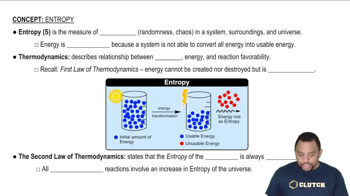
Entropy, denoted as ∆S, is a measure of the disorder or randomness in a system. A positive change in entropy (∆S > 0) indicates an increase in disorder, often associated with the production of gas from solids or liquids, or the mixing of different substances. Understanding how the states of matter change during a reaction is crucial for predicting the sign of ∆S.
추천 영상:
가이드 코스
02:46
Entropy in Thermodynamics

States of Matter

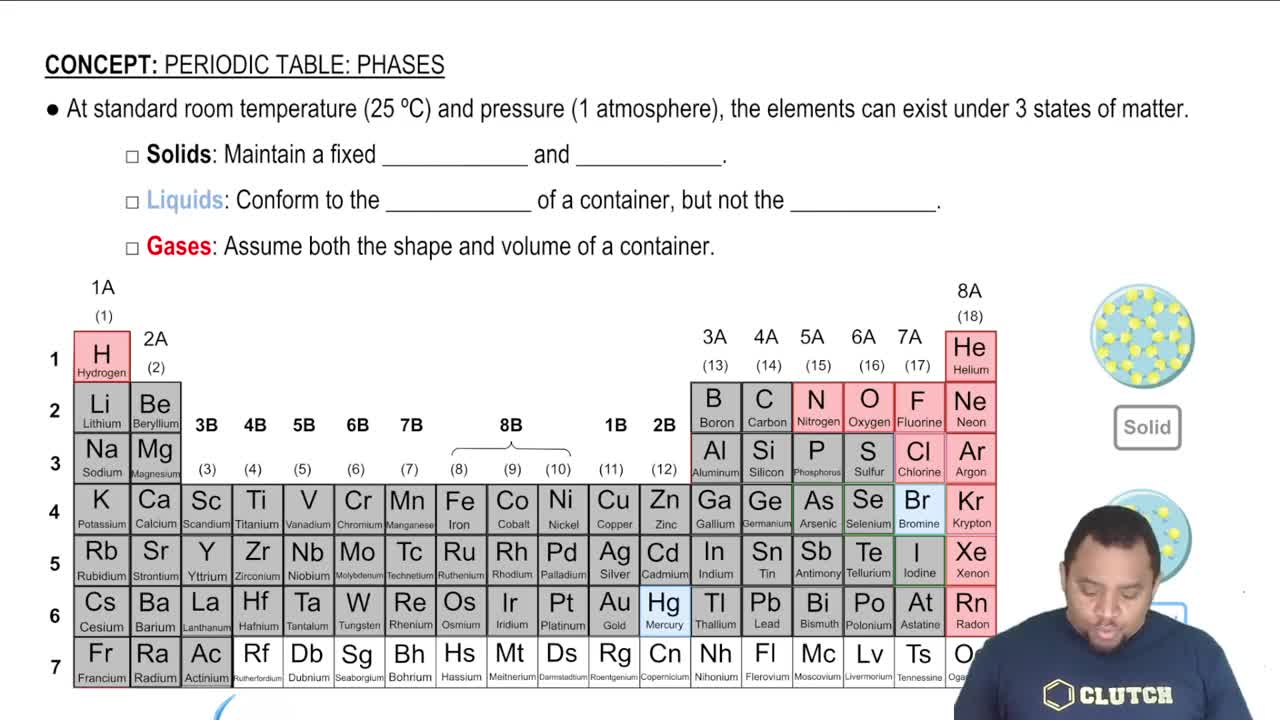
The states of matter—solid, liquid, and gas—play a significant role in determining the entropy of a system. Gases have higher entropy than liquids, which in turn have higher entropy than solids. When analyzing reactions, recognizing the changes in states of the reactants and products helps in assessing whether the overall entropy increases or decreases.
추천 영상:
가이드 코스
03:25
Element States of Matter

Thermodynamic Reactions

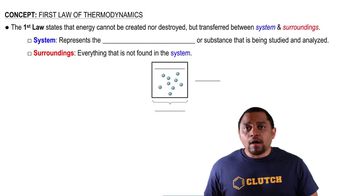
Thermodynamic reactions involve the study of energy changes and the direction of chemical processes. In this context, reactions can be evaluated based on their enthalpy (∆H) and entropy (∆S) changes. Understanding how these factors influence the spontaneity and equilibrium of reactions is essential for determining which reactions result in a positive change in entropy.
추천 영상:
가이드 코스
01:18
First Law of Thermodynamics