Ch.9 - Thermochemistry: Chemical Energy
McMurry - Chemistry 8th Edition
McMurry8th EditionChemistryISBN: 9781292336145당신이 사용하는 게 아니라요?교과서 변경
9장, 문제 101

What is the phase of the standard states of the following ele- ments and compounds? (a) NH3 (b) Fe (c) N2 (d) Br2

검증된 단계별 안내
1
Identify the standard state of each substance at 1 atm pressure and a temperature of 25°C (298 K).
For NH3 (ammonia), recognize that it is a gas under standard conditions. Therefore, the phase of NH3 in its standard state is gaseous.
For Fe (iron), note that it is a solid metal at room temperature and pressure. Thus, the phase of Fe in its standard state is solid.
For N2 (nitrogen), understand that it is a diatomic molecule that exists as a gas at standard conditions. Hence, the phase of N2 in its standard state is gaseous.
For Br2 (bromine), consider that it is a liquid at room temperature, making it unique among the halogens. Therefore, the phase of Br2 in its standard state is liquid.

비슷한 문제에 대한 검증된 영상 답변:

이 영상 해법은 위 문제에 도움이 된다고 튜터들이 추천한 것입니다.
영상 길이:
1m

주요 개념

질문에 올바르게 답하기 위해 반드시 이해해야 하는 핵심 개념들은 다음과 같습니다.

Standard State

The standard state of a substance refers to its physical state (solid, liquid, or gas) at a specified temperature and pressure, typically 1 bar (100 kPa) and 25°C (298 K). Understanding the standard state is crucial for determining the phase of elements and compounds under standard conditions, as it provides a reference point for thermodynamic calculations.
추천 영상:
가이드 코스
01:10
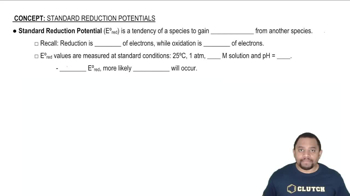
Standard Reduction Potentials

Phase of Matter

The phase of matter describes the distinct forms that different phases of matter take on. The three primary phases are solid, liquid, and gas, each characterized by different properties such as shape, volume, and molecular arrangement. For example, while metals like iron (Fe) are solid at room temperature, gases like nitrogen (N2) exist in a gaseous state.
추천 영상:
가이드 코스
03:19
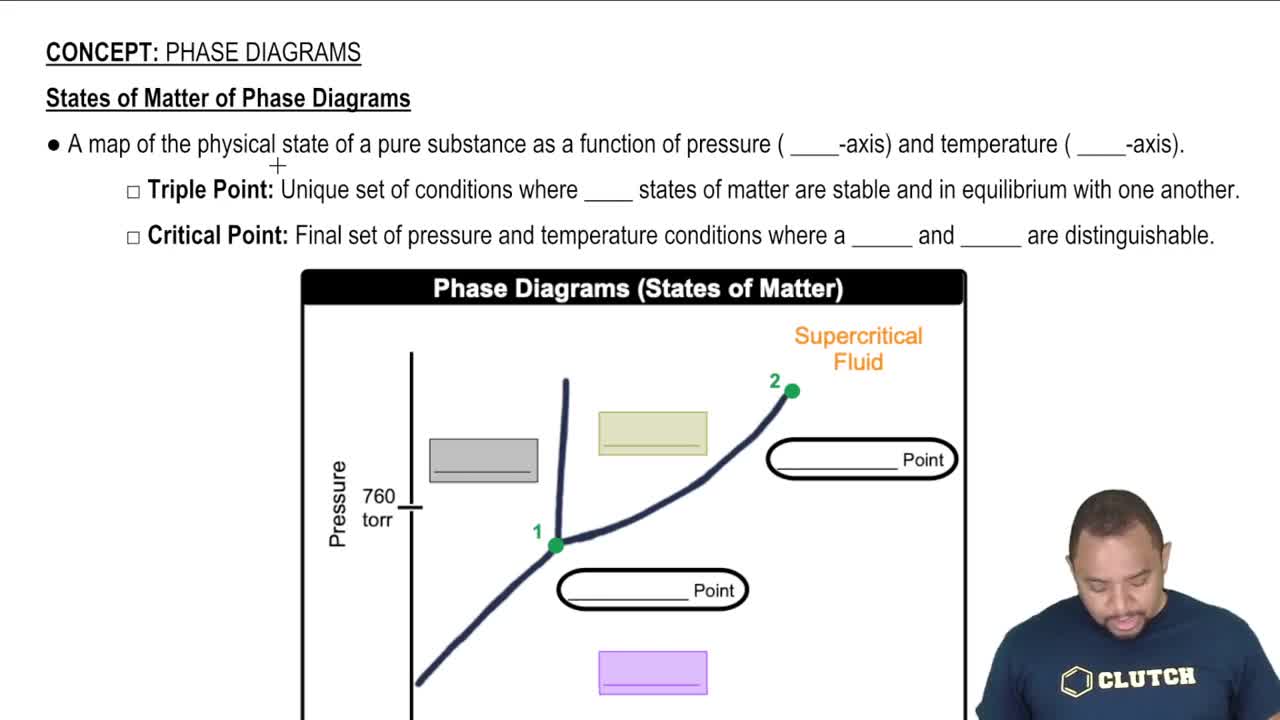
States of Matter of Phase Diagrams

Element vs. Compound

Elements are pure substances that consist of only one type of atom, while compounds are substances formed from two or more different types of atoms chemically bonded together. This distinction is important when identifying the phases of substances, as elements like iron (Fe) and nitrogen (N2) exhibit different physical states compared to compounds like ammonia (NH3) and bromine (Br2) under standard conditions.
추천 영상:
가이드 코스
01:21
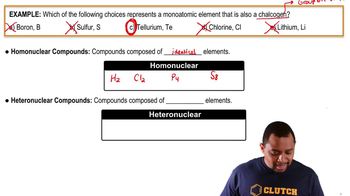
Homonuclear vs. Heteronuclear Compounds