Ch.20 - Radioactivity and Nuclear Chemistry
Tro - Chemistry: A Molecular Approach 4th Edition
Tro4th EditionChemistry: A Molecular ApproachISBN: 9780134112831당신이 사용하는 게 아니라요?교과서 변경
20장, 문제 59

Write the nuclear equation for the fusion of two H-2 atoms to form He-3 and one neutron.

검증된 단계별 안내
1
Identify the isotopes involved in the reaction. Here, we have two hydrogen-2 (H-2) atoms, also known as deuterium, which will fuse together.
Write down the nuclear symbols for the reactants. Deuterium can be represented as \\( ^2_1H \\).
Determine the products of the fusion reaction. When two deuterium nuclei fuse, they typically produce a helium-3 (He-3) nucleus and a neutron. Helium-3 can be represented as \\( ^3_2He \\), and a neutron can be represented as \\( ^1_0n \\).
Write the nuclear equation by balancing the atomic numbers and mass numbers on both sides of the equation. The sum of atomic numbers (Z) and mass numbers (A) must be equal on both sides of the equation.
The balanced nuclear equation for the fusion of two deuterium nuclei is: \\(^2_1H + ^2_1H \rightarrow ^3_2He + ^1_0n\\).

비슷한 문제에 대한 검증된 영상 답변:

이 영상 해법은 위 문제에 도움이 된다고 튜터들이 추천한 것입니다.
영상 길이:
1m

주요 개념

질문에 올바르게 답하기 위해 반드시 이해해야 하는 핵심 개념들은 다음과 같습니다.

Nuclear Fusion

Nuclear fusion is the process where two light atomic nuclei combine to form a heavier nucleus, releasing energy in the process. This reaction is the source of energy for stars, including the sun, and occurs under extreme temperature and pressure conditions. In the case of hydrogen isotopes, such as H-2 (deuterium), fusion can produce helium and other particles.
추천 영상:
가이드 코스
02:06
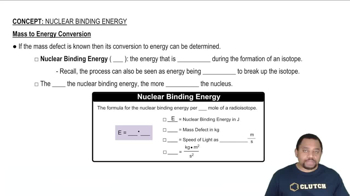
Nuclear Binding Energy

Nuclear Equations

Nuclear equations represent the transformation of atomic nuclei during nuclear reactions. They show the reactants and products, including their atomic numbers and mass numbers, ensuring that both are conserved. For fusion reactions, the equation must balance the total number of protons and neutrons before and after the reaction.
추천 영상:
가이드 코스
02:06
Nuclear Binding Energy

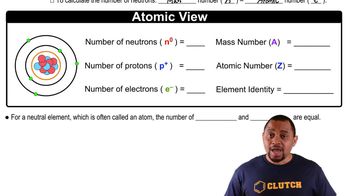
Isotopes

Isotopes are variants of a chemical element that have the same number of protons but different numbers of neutrons, resulting in different mass numbers. For example, H-2 (deuterium) has one neutron, while H-1 (protium) has none. Understanding isotopes is crucial in nuclear reactions, as they can significantly affect the reaction's products and energy output.
추천 영상: