 뒤로
Genetics: Polygeny, Epistasis, and Pedigrees
 07:10

이 집합의 용어 (21)
Polygeny refers to a single trait controlled by more than one gene, often resulting in continuous variation.
Epistasis occurs when one gene masks or blocks the phenotype of another gene involved in the same trait.
Recessive epistasis happens when the recessive genotype of one gene masks the phenotype of another gene.
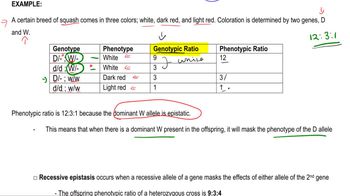
Dominant epistasis occurs when the dominant allele of one gene masks the phenotype of another gene.
Complementary gene action requires functional alleles of two different genes to produce a phenotype; both genes are needed for the trait to appear.
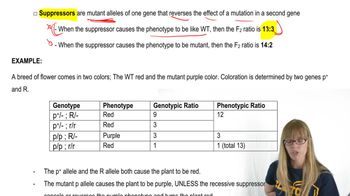
Phenotype ratios that deviate from classic Mendelian ratios (like 9:3:3:1) often suggest epistasis is occurring.
Gene R controls whether the hamster has fur or is naked; R produces fur, while rr results in nakedness.
Gene W controls the color of the fur (white or tan) if fur is present.
The typical phenotype ratio is 9:3:4, where the recessive epistatic genotype masks other phenotypes.
The expected ratio is 12:3:1, where the dominant epistatic allele masks the other gene's phenotype.
It produces a 9:7 ratio, where only individuals with at least one dominant allele at both loci show the trait.
Multiple genes means several genes influence one trait, while multiple alleles means more than two alleles exist for a single gene.
An autosomal recessive trait can skip generations, affects males and females equally, and affected offspring can have unaffected parents.
Autosomal dominant traits do not skip generations, affect males and females equally, and affected offspring have at least one affected parent.
X-linked recessive traits affect males more often, can skip generations, and affected females pass the trait to all sons.
X-linked dominant traits affect females more often, do not skip generations, and affected males pass the trait to all daughters.
Y-linked traits occur only in males and are passed from affected males to all their sons.
Maternal inheritance is passed from females to all offspring; males do not pass the trait further.
Penetrance is the percentage of individuals with a genotype who actually show the expected phenotype.
Expressivity refers to the degree or severity to which a phenotype is expressed in individuals with the same genotype.
They can be caused by environmental factors and modifier genes affecting phenotype expression.