Ch. 22 - Applications of Genetic Engineering and Biotechnology
Klug - Concepts of Genetics 12th Edition
Klug12th EditionConcepts of GeneticsISBN: 9780135564776당신이 사용하는 게 아니라요?교과서 변경
22장, 문제 15

The family of a sixth-grade boy in Palo Alto, California, was informed by school administrators that he would have to transfer out of his middle school because they believed his mutation of the CFTR gene, which does not produce any symptoms associated with cystic fibrosis, posed a risk to other students at the school who have cystic fibrosis. After missing 11 days of school, a settlement was reached to have the boy return to school. What ethical problems might you associate with this example?

검증된 단계별 안내
1
Understand the context: The CFTR gene mutation is associated with cystic fibrosis, a genetic disorder that affects the respiratory and digestive systems. However, not all mutations in the CFTR gene result in symptoms of the disease. In this case, the boy has a mutation that does not produce symptoms, meaning he is not affected by cystic fibrosis.
Identify the ethical issue: The school administrators' decision to transfer the boy was based on the assumption that his genetic mutation posed a risk to other students with cystic fibrosis. This raises ethical concerns about genetic discrimination, as the boy was treated differently based solely on his genetic information, despite not having the disease.
Consider the principle of non-maleficence: This principle in bioethics emphasizes avoiding harm. The decision to exclude the boy from school caused harm to him (e.g., missed education, emotional distress) without clear evidence that his presence posed a risk to others. This violates the principle of non-maleficence.
Examine the principle of justice: Justice in bioethics involves fairness and equal treatment. The boy was treated unfairly based on his genetic information, which is a form of genetic discrimination. This raises questions about the fairness of the school's actions and whether they were justified.
Reflect on the importance of informed decision-making: The school administrators may have acted without fully understanding the science behind the CFTR gene mutation and its implications. Ethical decision-making requires accurate scientific knowledge and consultation with experts to avoid unnecessary harm and discrimination.

비슷한 문제에 대한 검증된 영상 답변:

이 영상 해법은 위 문제에 도움이 된다고 튜터들이 추천한 것입니다.
영상 길이:
54s

주요 개념

질문에 올바르게 답하기 위해 반드시 이해해야 하는 핵심 개념들은 다음과 같습니다.

CFTR Gene and Cystic Fibrosis

The CFTR gene encodes a protein that regulates the movement of salt and water in and out of cells. Mutations in this gene can lead to cystic fibrosis, a serious genetic disorder that affects the lungs and digestive system. Understanding the nature of the specific mutation in the boy's case is crucial, as some mutations may not result in symptoms, raising questions about the implications of labeling individuals based on genetic information.
추천 영상:
가이드 코스
09:12
Transgenic Organisms and Gene Therapy

Ethical Considerations in Genetic Discrimination

Genetic discrimination occurs when individuals are treated unfairly based on their genetic information. In this scenario, the boy's transfer raises ethical concerns about the rights of individuals with genetic mutations, particularly when those mutations do not manifest as health issues. It highlights the tension between public health interests and individual rights, emphasizing the need for careful consideration of how genetic information is used in decision-making.
추천 영상:
가이드 코스
03:45
Descriptive Genetics

Informed Consent and Privacy

Informed consent is a fundamental ethical principle that requires individuals to understand and agree to the use of their personal information, including genetic data. The situation raises questions about whether the school had the right to disclose the boy's genetic status and whether the family was adequately informed about the implications of this information. Protecting privacy and ensuring informed consent are essential in discussions about genetic testing and its consequences.
추천 영상:
가이드 코스
02:48
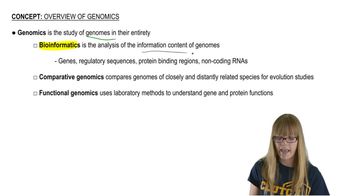
Genomics Overview
관련 실천
교과서 질문

The National Institutes of Health created the Genetic Testing Registry (GTR) to increase transparency by publicly sharing information about the utility of their tests, research for the general public, patients, health-care workers, genetic counselors, insurance companies, and others. The Registry is intended to provide better information to patients, but companies involved in genetic testing are not required to participate. Should company participation be mandatory? Why or why not? Explain your answers.

552
views
교과서 질문

Describe how the team from the J. Craig Venter Institute created a synthetic genome. How did the team demonstrate that the genome converted the recipient strain of bacteria into a different strain?

546
views
교과서 질문

Dominant mutations can be categorized according to whether they increase or decrease the overall activity of a gene or gene product. Although a loss-of-function mutation (a mutation that inactivates the gene product) is usually recessive, for some genes, one dose of the normal gene product, encoded by the normal allele, is not sufficient to produce a normal phenotype. In this case, a loss-of-function mutation in the gene will be dominant, and the gene is said to be haploinsufficient. A second category of dominant mutation is the gain-of-function mutation, which results in a new activity or increased activity or expression of a gene or gene product. The gene therapy technique currently being used in clinical trials involves the 'addition' to somatic cells of a normal copy of a gene. In other words, a normal copy of the gene is inserted into the genome of the mutant somatic cell, but the mutated copy of the gene is not removed or replaced. Will this strategy work for either of the two aforementioned types of dominant mutations?

670
views
교과서 질문

Consider ethical issues associated with creating a synthetic human genome. Are there specific applications for a synthetic human genome that you support? Is creating a synthetic genome enhanced with genes for certain kinds of traits one of those applications?

523
views
교과서 질문

In 2013 the actress Angelina Jolie elected to have prophylactic double-mastectomy surgery to prevent breast cancer based on a positive test for mutation of the BRCA1 gene. What are some potential positive and negative consequences of this high-profile example of acting on the results of a genetic test?

786
views
교과서 질문

What is the main purpose of genome-wide association studies (GWAS)? How can information from GWAS be used to inform scientists and physicians about genetic diseases?

1031
views
1
rank