Ch. 7 - Sex Determination and Sex Chromosomes
Klug - Concepts of Genetics 12th Edition
Klug12th EditionConcepts of GeneticsISBN: 9780135564776당신이 사용하는 게 아니라요?교과서 변경
7장, 문제 1a

How do we know whether or not a heteromorphic chromosome such as the Y chromosome plays a crucial role in the determination of sex?

검증된 단계별 안내
1
Understand the concept of heteromorphic chromosomes: Heteromorphic chromosomes are chromosomes that differ in size, shape, or staining properties. In humans, the X and Y chromosomes are an example, where the Y chromosome is significantly smaller and contains fewer genes than the X chromosome.
Review the role of the Y chromosome in sex determination: The Y chromosome contains the SRY (Sex-determining Region Y) gene, which is critical for initiating male sex determination. This gene triggers the development of testes, which produce male hormones necessary for male sexual development.
Examine experimental evidence: Studies involving individuals with atypical chromosomal compositions, such as XX males (who have the SRY gene translocated to an X chromosome) and XY females (who lack a functional SRY gene), provide strong evidence that the Y chromosome, specifically the SRY gene, is crucial for male sex determination.
Consider comparative studies in other species: Research in other organisms, such as mice, has shown that introducing the SRY gene into XX embryos can result in male development, further supporting the role of the Y chromosome in sex determination.
Summarize the reasoning: The presence of the SRY gene on the Y chromosome and its ability to direct male development, along with evidence from chromosomal abnormalities and experimental studies, demonstrate that the Y chromosome plays a crucial role in the determination of sex.

비슷한 문제에 대한 검증된 영상 답변:

이 영상 해법은 위 문제에 도움이 된다고 튜터들이 추천한 것입니다.
영상 길이:
1m

주요 개념

질문에 올바르게 답하기 위해 반드시 이해해야 하는 핵심 개념들은 다음과 같습니다.

Heteromorphic Chromosomes

Heteromorphic chromosomes are pairs of chromosomes that differ in size, shape, or genetic content, such as the X and Y chromosomes in humans. The Y chromosome is significantly smaller and contains fewer genes than the X chromosome, which is crucial for understanding its role in sex determination. The presence of a Y chromosome typically indicates male sex in many organisms, as it carries the SRY gene responsible for initiating male development.
추천 영상:
가이드 코스
07:10
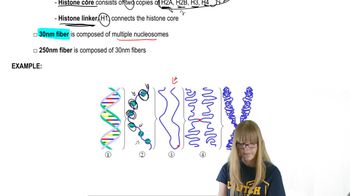
Chromosome Structure

Sex Determination Mechanisms

Sex determination mechanisms refer to the biological processes that dictate the development of sexual characteristics in an organism. In many species, including humans, the presence of specific sex chromosomes (XX for females and XY for males) triggers a cascade of genetic and hormonal events that lead to the development of male or female phenotypes. Understanding these mechanisms is essential for evaluating the role of the Y chromosome in sex determination.
추천 영상:
가이드 코스
04:24
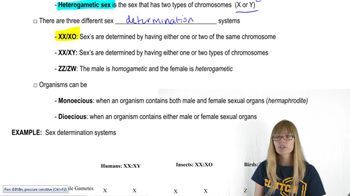
Sex Determination

Genetic Evidence and Experimental Approaches

Genetic evidence and experimental approaches involve the use of various techniques, such as gene knockout studies, chromosomal mapping, and comparative genomics, to investigate the functions of specific genes and chromosomes. These methods help researchers determine the role of the Y chromosome in sex determination by observing the effects of its absence or alteration on sexual development. Such evidence is critical for establishing the Y chromosome's importance in the sex determination process.
추천 영상:
가이드 코스
03:45
Descriptive Genetics