 뒤로
뒤로GOB Chemistry: Proteins and Amino Acids
 1:39
1:39
이 집합의 용어 (20)
Biochemistry is the study of the chemistry of life, focusing on all chemical reactions in living organisms.
The four classes are proteins, lipids, carbohydrates, and nucleic acids.
Proteins act as enzymes (biological catalysts), hormones, storage, transport, structural, protective, and contractile proteins.
An amino acid has a central alpha carbon (Cα) bonded to an amine group, a carboxylic acid group, a hydrogen atom, and a variable side chain (R group).
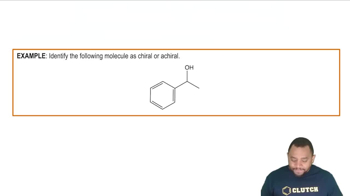
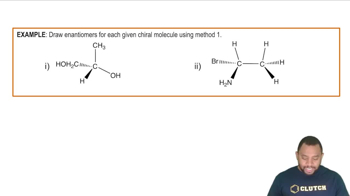
A chiral carbon is a carbon atom bonded to four different chemical groups or atoms, resulting in non-superimposable mirror images (enantiomers).
Constitutional isomers differ in bonding order; stereoisomers have the same bonding order but different spatial arrangements, including enantiomers (mirror images) and diastereoisomers (not mirror images).
Amino acids are classified as nonpolar (hydrophobic), neutral polar (hydrophilic), acidic (negatively charged), or basic (positively charged) based on their side chains.
Zwitterions are amino acids with both positive (amine) and negative (carboxylate) charges simultaneously, typically at physiological pH (~7).
Acidic amino acids have negatively charged side chains; basic amino acids have positively charged side chains at pH 7.
The primary structure is the linear sequence of amino acids linked by peptide bonds, written from the N-terminus to the C-terminus.
Glycine is flexible due to its small side chain; proline has a rigid cyclic structure affecting backbone conformation; cysteine forms disulfide bonds stabilizing tertiary structure.
The main secondary structures are the alpha-helix and the beta-pleated sheet, stabilized by hydrogen bonds between backbone amide groups.
Primary structure: covalent peptide bonds; secondary: hydrogen bonds; tertiary and quaternary: hydrophobic interactions, hydrogen bonds, ionic bonds (salt bridges), and disulfide bonds.
The hydrophobic effect is the exclusion of water by nonpolar side chains, causing them to pack inside the protein, driving folding.
An alpha-helix is stabilized by hydrogen bonds between the amide hydrogen of one amino acid and the carbonyl oxygen four residues earlier.
Beta-sheets are stabilized by hydrogen bonds between amide groups on adjacent beta-strands, which can be parallel or antiparallel.
A peptide bond is a covalent amide bond formed between the carboxyl group of one amino acid and the amine group of another, releasing water.
Disulfide bonds are covalent bonds formed between thiol groups of cysteine residues, stabilizing tertiary and quaternary protein structures.
Nonpolar amino acids prefer hydrophobic environments and tend to be buried inside protein structures away from water.
The amine group (-NH3+) and amide groups can act as hydrogen bond donors in amino acids.