 뒤로
Lec 16 GOB Chemistry: Carbohydrate Metabolism
 1:51

이 집합의 용어 (20)
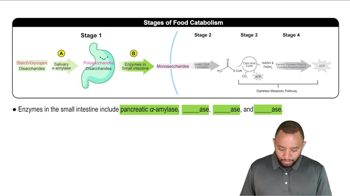
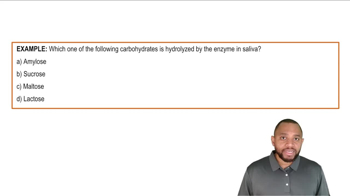
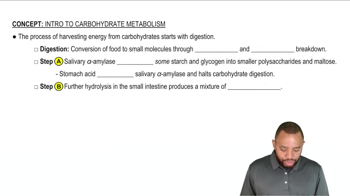
Carbohydrates are digested in the mouth (salivary α-amylase), stomach, and small intestine (pancreatic α-amylase), with absorption through the small intestines.
Glycolysis is the breakdown of glucose into two molecules of pyruvate while producing energy.
Gluconeogenesis is the synthesis of glucose from amino acids, pyruvate, and non-carbohydrate sources.
Glycogenesis is the synthesis of glycogen from glucose.
Glycogenolysis is the breakdown of glycogen to glucose.
The pentose phosphate pathway converts glucose to five-carbon sugar phosphates used for nucleic acid synthesis and lipid biosynthesis coenzymes.
To convert glucose to two molecules of pyruvate while producing energy (ATP and NADH).
Steps 1 (hexokinase) and 3 (phosphofructokinase) use ATP to phosphorylate glucose and fructose-6-phosphate.
Steps 7 (phosphoglycerate kinase) and 10 (pyruvate kinase) produce ATP via substrate-level phosphorylation.
Step 6 (glyceraldehyde 3-phosphate dehydrogenase) produces NADH.
Phosphorylation traps glucose inside the cell and activates it by making it a high-energy molecule.
It is the committed step of glycolysis, highly exergonic and irreversible, controlled by allosteric regulators.
ATP and citrate are negative regulators; ADP and AMP are positive regulators.
A six-carbon sugar (fructose-1,6-bisphosphate) is cleaved into two three-carbon molecules: dihydroxyacetone phosphate and glyceraldehyde 3-phosphate.
Pyruvate is converted to lactate to regenerate NAD+ for glycolysis continuation.
Pyruvate is converted to acetyl-CoA which enters the citric acid cycle.
RBCs lack mitochondria, so they convert pyruvate to lactate anaerobically, producing ATP without oxygen.
Glucose + 2 NAD+ + 2 ADP + 2 Pi → 2 pyruvate + 2 NADH + 2 ATP + 2 H2O.
Enzymes include hexokinase, isomerase, phosphofructokinase, aldolase, dehydrogenase, kinase, mutase, enolase, and pyruvate kinase.
Production of energy under anaerobic conditions by converting pyruvate to lactate or ethanol to regenerate NAD+.