Skip to main content
GOB Chemistry
나의 코스
배우기
시험 준비
AI 튜터
학습 가이드
교과서적 해결책
플래시카드
탐험해 보세요
앱을 사용해 보세요
나의 코스
배우기
시험 준비
AI 튜터
학습 가이드
교과서적 해결책
플래시카드
탐험해 보세요
앱을 사용해 보세요
뒤로
Lec 17 GOB Chemistry: TCA Cycle and Electron Transport Chain
카드를 뒤집기 위해 탭할 수 있습니다.
Where does the TCA cycle take place in the cell?
카드를 뒤집기 위해 탭할 수 있습니다.
👆
Where does the TCA cycle take place in the cell?
The TCA cycle occurs in the
mitochondrial matrix
of eukaryotic cells.
진행 상황 추적
컨트롤 버튼이 '내비게이션' 모드로 변경되었습니다.
1/21
추천 영상
1:21
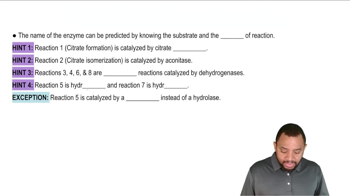
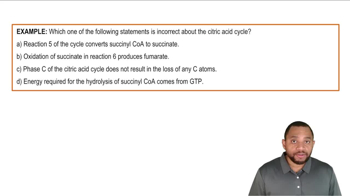
Phase C - Oxaloacetate Regeneration Example 3
2954
views
1
rank
1:28
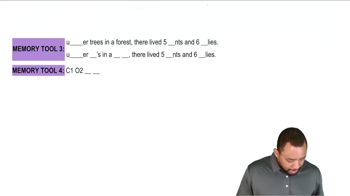
Remembering Citric Acid Cycle Concept 16
2962
views
1
rank
2:42
Citric Acid Cycle Summary Concept 14
2974
views
이 집합의 용어 (21)
하이드의 정의
Where does the TCA cycle take place in the cell?
The TCA cycle occurs in the
mitochondrial matrix
of eukaryotic cells.
What is the main purpose of the TCA cycle?
To
oxidize acetyl-CoA
to CO2 and produce reduced coenzymes (NADH, FADH2) for energy extraction.
How many turns of the TCA cycle occur per glucose molecule?
Two turns of the TCA cycle occur for every glucose molecule, as each glucose produces two acetyl-CoA molecules.
Which TCA cycle steps produce reduced coenzymes and ATP?
Steps 3 and 4 produce NADH and CO2, step 5 produces GTP (ATP equivalent), and step 6 produces FADH2.
Name the enzyme that catalyzes the first step of the TCA cycle.
Citrate synthase
catalyzes the condensation of acetyl-CoA and oxaloacetate to form citrate.
How is pyruvate dehydrogenase regulated?
It is
inhibited
by high energy molecules (ATP, NADH, Acetyl-CoA) and
activated
by low energy molecules (NAD+, AMP, CoA-SH).
What are the three enzymes of the pyruvate dehydrogenase complex?
1) Pyruvate dehydrogenase, 2) Dihydrolipoyl transacetylase, 3) Dihydrolipoyl dehydrogenase.
What coenzymes are involved in the pyruvate dehydrogenase complex?
TPP (Vitamin B1), CoA-SH, lipoic acid, NAD+, and FAD.
What is the net energy yield from one glucose molecule after the TCA cycle?
6 NADH, 2 FADH2, and 2 ATP (or GTP) are produced per glucose molecule.
What is the role of the electron transport chain (ETC)?
To couple the oxidation of NADH and FADH2 with the phosphorylation of ADP to produce ATP via oxidative phosphorylation.
Which complexes in the ETC pump protons across the membrane?
Complexes I, III, and IV are proton pumps that create a proton gradient across the inner mitochondrial membrane.
What is the final electron acceptor in the ETC?
Molecular oxygen (O2) accepts electrons and combines with protons to form water (H2O).
How does ATP synthase produce ATP?
ATP synthase uses the energy from protons flowing down their electrochemical gradient through its channel to phosphorylate ADP to ATP.
Why is the maintenance of the membrane potential crucial for ATP formation?
The proton gradient stores potential energy that drives ATP synthesis when protons flow back into the matrix via ATP synthase.
Why are NADH and FADH2 considered high energy molecules?
They carry high-energy electrons that, when oxidized in the ETC, release energy used to pump protons and generate ATP.
What is the approximate total ATP yield from complete oxidation of one glucose molecule?
About
38 ATP
molecules are produced from glycolysis, TCA cycle, and oxidative phosphorylation combined.
What happens to the remaining 60% of energy from glucose oxidation?
It is released as
heat energy
to help maintain body temperature.
Classify citrate synthase enzyme type.
Citrate synthase is a
ligase
that forms bonds between molecules using energy.
What is the substrate and product of Complex I in the ETC?
Substrate: NADH; Product: NAD+ and electrons passed to ubiquinone.
What is the substrate and product of Complex II in the ETC?
Substrate: FADH2 (from succinate); Product: FAD and electrons passed to ubiquinone.
What is the substrate and product of Complex IV in the ETC?
Substrate: Electrons and O2; Product: H2O formed by reduction of oxygen.
 뒤로뒤로
 1:21