Ch.12 Food as Fuel An Overview of Metabolism
Frost - General, Organic and Biological Chemistry 4th Edition
Frost4th EditionGeneral, Organic and Biological ChemistryISBN: 9780134988696당신이 사용하는 게 아니라요?교과서 변경
8장, 문제 99

Can acetyl CoA feed into gluconeogenesis, producing glucose for the body? Can fatty acids be used to produce glucose?

검증된 단계별 안내
1
Understand the process of gluconeogenesis, which is the synthesis of glucose from non-carbohydrate precursors.
Recognize that acetyl CoA is a central molecule in metabolism, primarily entering the citric acid cycle (Krebs cycle) for energy production.
Identify that gluconeogenesis primarily occurs in the liver and involves substrates like lactate, glycerol, and certain amino acids, but not acetyl CoA.
Acknowledge that fatty acids are broken down into acetyl CoA through beta-oxidation, but acetyl CoA cannot be converted back into glucose because it cannot be converted into pyruvate or enter the gluconeogenesis pathway.
Conclude that while fatty acids can provide energy, they cannot be directly converted into glucose due to the irreversible nature of the pyruvate dehydrogenase reaction converting pyruvate to acetyl CoA.

비슷한 문제에 대한 검증된 영상 답변:

이 영상 해법은 위 문제에 도움이 된다고 튜터들이 추천한 것입니다.
영상 길이:
2m

주요 개념

질문에 올바르게 답하기 위해 반드시 이해해야 하는 핵심 개념들은 다음과 같습니다.

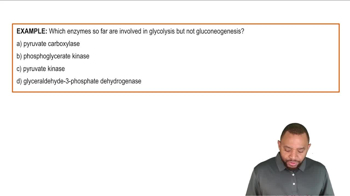
Gluconeogenesis

Gluconeogenesis is the metabolic pathway through which organisms synthesize glucose from non-carbohydrate precursors. This process primarily occurs in the liver and, to a lesser extent, in the kidneys. It is crucial during fasting or intense exercise when glucose levels are low, allowing the body to maintain energy supply. Key substrates for gluconeogenesis include lactate, glycerol, and certain amino acids, but not acetyl CoA.
추천 영상:
가이드 코스
1:23
Gluconeogenesis Example 2

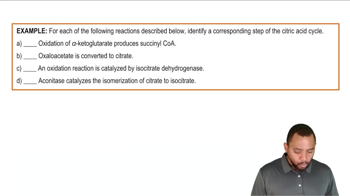
Acetyl CoA

Acetyl CoA is a central metabolite in energy production and biosynthesis, formed from the breakdown of carbohydrates, fats, and proteins. While it plays a vital role in the citric acid cycle and fatty acid synthesis, it cannot be converted back into glucose. This is due to the irreversible nature of the conversion of pyruvate to acetyl CoA, which means that acetyl CoA cannot serve as a substrate for gluconeogenesis.
추천 영상:
가이드 코스
1:33
Phase B - Succinyl CoA Formation Example 2

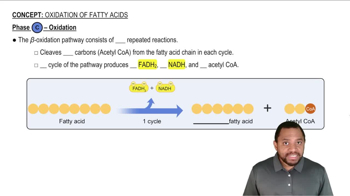
Fatty Acid Oxidation

Fatty acid oxidation is the metabolic process by which fatty acids are broken down to produce energy, primarily in the form of acetyl CoA. While fatty acids can provide significant energy, they cannot be converted into glucose through gluconeogenesis. This limitation arises because the conversion of fatty acids to glucose is not feasible in mammals, making them a non-gluconeogenic substrate.
추천 영상:
가이드 코스
1:29
Oxidation of Fatty Acids Concept 3