Ch.12 Food as Fuel An Overview of Metabolism
Frost - General, Organic and Biological Chemistry 4th Edition
Frost4th EditionGeneral, Organic and Biological ChemistryISBN: 9780134988696당신이 사용하는 게 아니라요?교과서 변경
8장, 문제 61a

Name the metabolic substrate(s) that can be produced from the carbon atoms of each of the following amino acids:
a. alanine

검증된 단계별 안내
1
Understand that alanine is an amino acid with the chemical formula CH3CH(NH2)COOH. It is classified as a glucogenic amino acid, meaning its carbon skeleton can be converted into glucose through gluconeogenesis.
Recognize that alanine undergoes transamination, a process where its amino group is transferred to α-ketoglutarate, forming pyruvate and glutamate. The reaction is catalyzed by the enzyme alanine aminotransferase.
Identify pyruvate as the key metabolic substrate produced from alanine. Pyruvate is a central intermediate in metabolism and can enter various pathways, such as gluconeogenesis to form glucose or the citric acid cycle for energy production.
Note that pyruvate can also be converted into acetyl-CoA, which enters the citric acid cycle, or into lactate under anaerobic conditions. However, the primary substrate derived from alanine is pyruvate.
Summarize that the carbon atoms of alanine are primarily converted into pyruvate, which serves as a versatile metabolic substrate in energy production and biosynthesis pathways.

비슷한 문제에 대한 검증된 영상 답변:

이 영상 해법은 위 문제에 도움이 된다고 튜터들이 추천한 것입니다.
영상 길이:
3m

주요 개념

질문에 올바르게 답하기 위해 반드시 이해해야 하는 핵심 개념들은 다음과 같습니다.

Amino Acid Metabolism

Amino acid metabolism involves the biochemical processes that break down amino acids for energy or convert them into other compounds. Each amino acid can be deaminated, where the amino group is removed, allowing the carbon skeleton to enter various metabolic pathways, such as gluconeogenesis or the citric acid cycle.
추천 영상:
가이드 코스
3:03
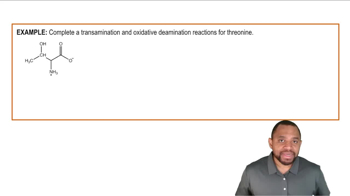
Amino Acid Catabolism: Amino Group Example 2

Gluconeogenesis

Gluconeogenesis is the metabolic pathway that generates glucose from non-carbohydrate substrates, including certain amino acids. Alanine, for instance, can be converted into pyruvate, which is a key intermediate in gluconeogenesis, ultimately leading to the production of glucose, especially during fasting or intense exercise.
추천 영상:
가이드 코스
1:23
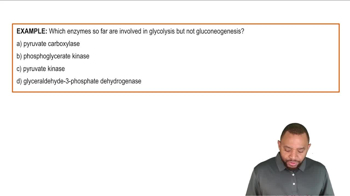
Gluconeogenesis Example 2

Citric Acid Cycle

The citric acid cycle, also known as the Krebs cycle, is a central metabolic pathway that plays a crucial role in energy production. Carbon skeletons from amino acids, after deamination, can be converted into acetyl-CoA or other intermediates that enter the cycle, facilitating the production of ATP and other energy-rich molecules.
추천 영상:
가이드 코스
2:31
Citric Acid Cycle Summary Concept 12